

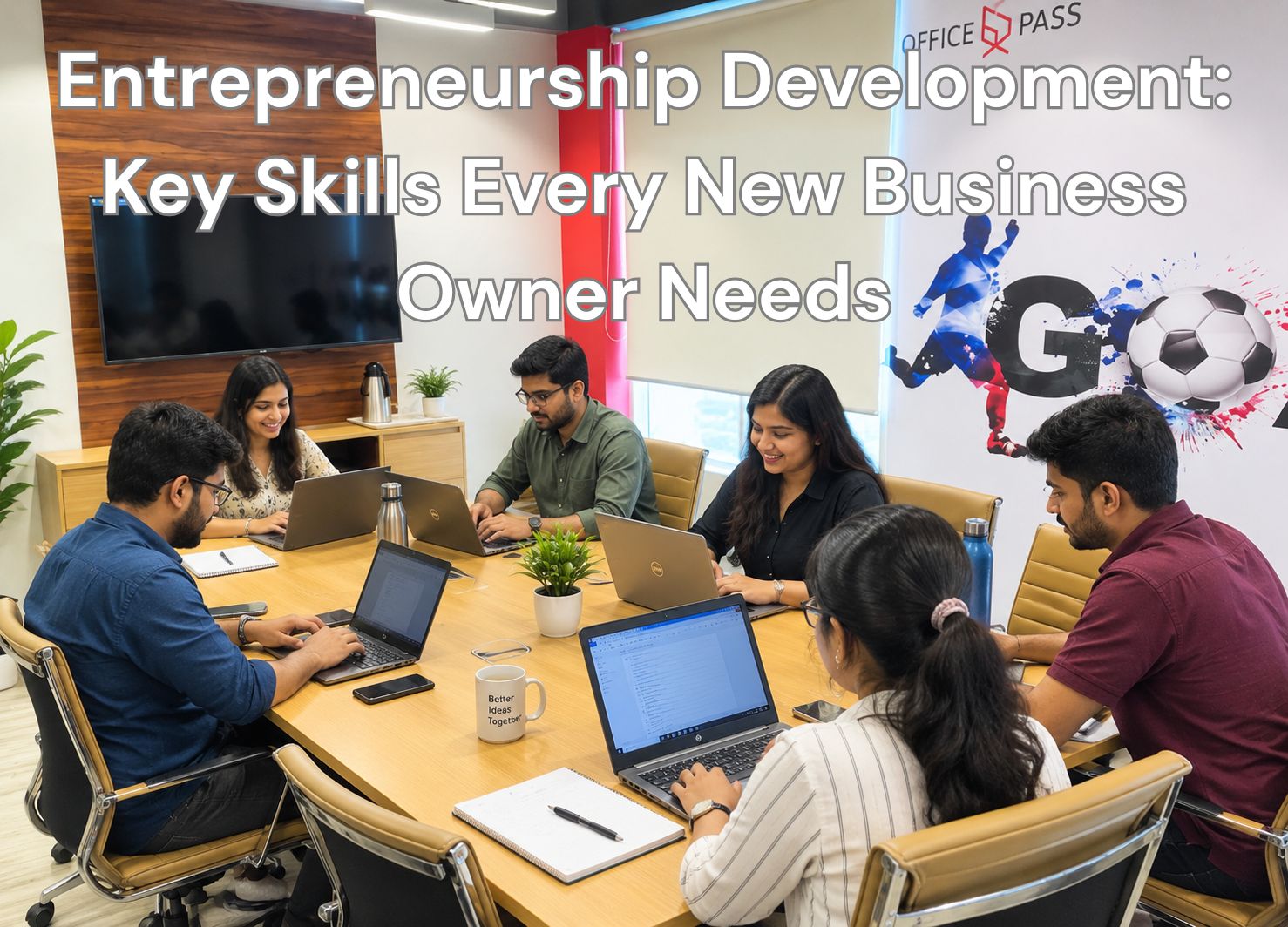
Entrepreneurship development is the process of building the skills, knowledge, mindset, and abilities needed to start and manage a business successfully. It helps new business owners understand opportunities, manage money, solve problems, lead teams, and make informed decisions. Strong entrepreneurship skills can help entrepreneurs handle challenges and adapt to changing market needs. Entrepreneurship development can be developed through education, practical experience, mentoring, and an entrepreneurship development programme.
For anyone planning to start a business, developing the right skills is important. Below are 10 key skills that can help new business owners build and manage their ventures effectively.
💡 Are you looking for Coworking space in Gurgaon, Noida or Delhi?. We are just a call away.
Call now: 08999 828282
10 Key Skills Needed for Entrepreneurship Development
- Communication Skills
- Leadership Skills
- Financial Management
- Problem-Solving Skills
- Decision-Making Skills
- Time Management
- Creativity and Innovation
- Marketing and Customer Understanding
- Risk Management
- Adaptability and Continuous Learning
1. Communication Skills
Good communication is important for every entrepreneur. Business owners need to communicate clearly with customers, employees, suppliers, investors, and business partners.
Strong communication includes speaking clearly, listening carefully, writing professional emails, and explaining business ideas in a simple way. Good communication can also help entrepreneurs build trust and maintain better relationships.

2. Leadership Skills
Entrepreneurs often need to guide employees and make important decisions. Leadership skills help business owners create a clear direction for their teams and encourage employees to work towards common goals.
A good leader should understand team members, delegate tasks, provide feedback, and take responsibility for business decisions. Leadership is an important part of entrepreneurship skills development because businesses often depend on effective teamwork.
3. Financial Management
Understanding basic finance is essential for running a business. Entrepreneurs need to know how much money is coming into the business and how much is being spent.
Financial management includes budgeting, cash-flow management, pricing, tracking expenses, and understanding profits and losses. A business owner does not always need to be an accountant, but having basic financial knowledge can help in making better business decisions.
Also Read: How Social Entrepreneurship Is Shaping Future Businesses?
4. Problem-Solving Skills
Every business faces problems. These may include low sales, customer complaints, supply issues, employee concerns, or unexpected expenses.
Entrepreneurs need to identify the main cause of a problem and find practical solutions. Instead of reacting quickly, they should collect relevant information, consider different options, and choose an appropriate solution.
Problem-solving is one of the core areas covered in many entrepreneurship development programme initiatives.
5. Decision-Making Skills
Business owners make decisions regularly. They may need to decide which products to sell, how much to charge, whom to hire, or where to invest money.
Good decision-making involves understanding the available information, considering possible risks, and thinking about the long-term impact. Entrepreneurs should also learn from previous decisions and adjust their approach when necessary.
Also Read: Customer Service Definition and Why It Matters for Business
6. Time Management
Entrepreneurs usually have many responsibilities. They may have to manage customers, finances, employees, marketing, operations, and business development at the same time.
Effective time management helps business owners decide which tasks need immediate attention and which can be handled later. Creating daily priorities, setting deadlines, and avoiding unnecessary tasks can improve productivity.
Time management is therefore an important part of entrepreneurship and skill development.
7. Creativity and Innovation
Creativity helps entrepreneurs develop new products, services, and ways of solving customer problems. Innovation can also help businesses improve existing products and processes.
Entrepreneurs should observe customer needs and market changes and look for ways to offer better solutions. Creativity does not always mean creating something completely new. It can also mean improving an existing idea or finding a more efficient way to deliver it.
Also Read: 10 Team Collaboration Tools Every Growing Business Needs
8. Marketing and Customer Understanding
A good business idea needs customers. Entrepreneurs therefore need basic knowledge of marketing and customer behaviour.
They should understand their target audience, identify customer needs, communicate the value of their products, and select suitable marketing channels. Digital marketing, social media, content marketing, and search engine optimisation can also help businesses reach potential customers.
Understanding customers can help entrepreneurs create products and services that solve real problems.
💡 Are you looking for Coworking space in Gurgaon, Noida or Delhi?. We are just a call away.
Call now: 08999 828282
9. Risk Management
Starting a business involves different types of risks. These can include financial risks, market competition, changing customer demand, operational problems, and regulatory requirements.
Entrepreneurs cannot remove every risk, but they can prepare for potential problems. This may include maintaining emergency funds, researching the market, testing products before a major launch, and having alternative plans.
Risk management is an important part of entrepreneurship development & management, especially as a business grows.
10. Adaptability and Continuous Learning
Markets, technology, customer expectations, and business practices continue to change. Entrepreneurs need to remain open to learning and adapting.
Continuous learning can involve attending workshops, joining an entrepreneurship development programme, reading industry information, learning new technologies, or seeking guidance from experienced professionals.
Adaptability also means being willing to change a business strategy when the existing approach is not producing the expected results. This makes continuous learning an important part of long-term entrepreneurship skills development.
Conclusion
Entrepreneurship development helps new business owners build the knowledge and abilities needed to manage different aspects of a business. Communication, leadership, financial management, problem-solving, decision-making, time management, creativity, marketing, risk management, and adaptability are valuable skills for entrepreneurs. These skills grow through education, practical experience, mentoring, and continuous learning. As a business takes shape, having a professional and flexible workspace can also support productivity, networking, and collaboration. The Office Pass (TOP) offers coworking spaces for entrepreneurs, freelancers, and growing businesses, providing a practical environment to work and connect. Contact TOP at +91-8999-828282 to explore a workspace that suits your business needs.
FREQUENTLY ASKED QUESTIONS (FAQS):
Question: What is entrepreneurship development?
Answer: Entrepreneurship development is the process of developing the knowledge, skills, and abilities needed to start and manage a business.
Question: Why is entrepreneurship development important?
Answer: It helps entrepreneurs improve decision-making, leadership, financial management, problem-solving, and other skills needed to manage a business.
Question: What are the main entrepreneurship skills?
Answer: Important entrepreneurship skills include communication, leadership, financial management, decision-making, creativity, marketing, problem-solving, and time management.
Question: How can I develop entrepreneurship skills?
Answer: You can develop entrepreneurship skills through courses, practical experience, mentoring, workshops, business projects, and continuous learning.
Question: What is an entrepreneurship development programme?
Answer: An entrepreneurship development programme is a structured programme designed to help people develop business knowledge, skills, and entrepreneurial abilities.
Question: Is financial knowledge important for entrepreneurs?
Answer: Yes. Basic financial knowledge helps entrepreneurs manage budgets, expenses, cash flow, pricing, and business profits more effectively.
Question: How does leadership help entrepreneurs?
Answer: Leadership helps entrepreneurs guide employees, delegate responsibilities, build teamwork, make decisions, and work towards business goals.
Question: What is entrepreneurship skills development?
Answer: Entrepreneurship skills development is the process of improving abilities such as communication, leadership, problem-solving, financial management, and decision-making.
Question: Can entrepreneurship skills be learned?
Answer: Yes. Many entrepreneurship skills can be developed through education, training, practical business experience, mentoring, and regular practice.
Question: How does adaptability help a business owner?
Answer: Adaptability helps business owners respond to changes in technology, customer preferences, competition, and market conditions while adjusting their business strategies when needed.