

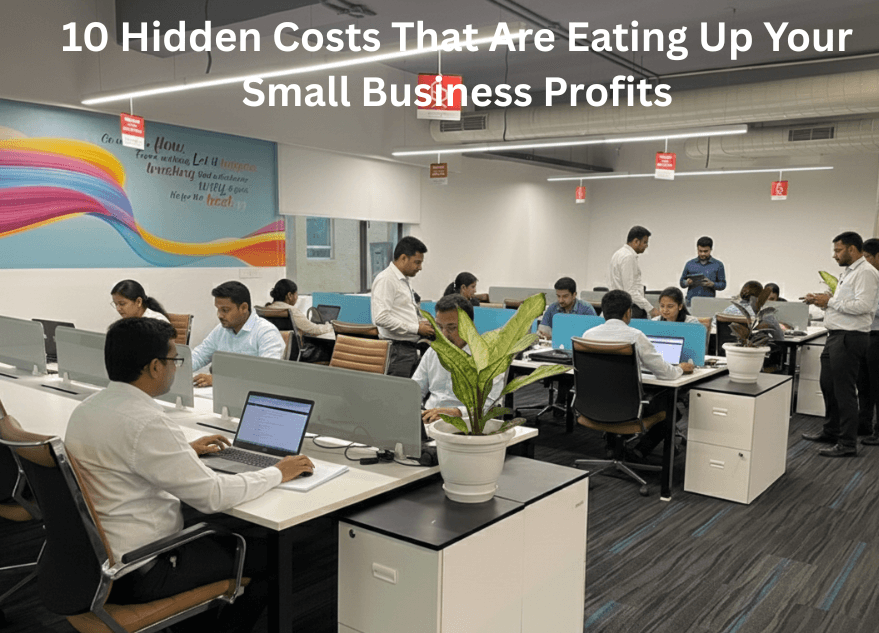
Running a small business is challenging, and while you manage visible costs like rent and payroll, hidden expenses often go unnoticed and quietly erode your profits.
💡 Are you looking for Coworking space in Gurgaon, Noida or Delhi? We are just a call away. Call Now: 08999 828282
10 Ways Hidden Costs Are Draining Your Small Business Profits
- Inefficient Processes Are Burning Cash Daily
- Poor Inventory Management Creates Double Trouble
- Energy Waste Adds Up Faster Than You Think
- Inadequate Insurance Coverage Creates Catastrophic Risk
- Technology Subscriptions Multiply Like Rabbits
- Poor Vendor Management Leaves Money on the Table
- Untracked Time Theft Happens in Plain Sight
- Regulatory Compliance Violations Bring Expensive Surprises
- Inadequate Financial Tracking Masks Profit Leaks
- Marketing Without Measurement Wastes Every Dollar
1. Inefficient Processes Are Burning Cash Daily
Every inefficient workflow is money walking out your door. When employees spend hours on tasks that could be automated or streamlined, you’re essentially paying premium wages for suboptimal results. Manual data entry, redundant approvals, and outdated systems waste precious time that could be used to generate revenue. Investing in process optimization delivers returns that compound over time.

2. Poor Inventory Management Creates Double Trouble
Excess inventory ties up capital while insufficient stock loses sales both scenarios hurt profits. Overstocking means paying for storage, insurance, and potential obsolescence of products sitting idle. Meanwhile, stockouts frustrate customers and send them straight to competitors. Implementing smart inventory-tracking systems prevents both extremes from eating into your margins.
3. Energy Waste Adds Up Faster Than You Think
Those lights burning overnight and inefficient HVAC systems are silent profit thieves. Small businesses often overlook energy audits, missing opportunities to cut utility costs by 20-30% through simple upgrades. Even basic changes like LED lighting, programmable thermostats, and energy-efficient equipment deliver immediate savings. Your monthly utility bill holds easy wins waiting to be claimed.
Also Read: Why Your Small Business Growth Stalled and How to Kickstart It Again?
4. Inadequate Insurance Coverage Creates Catastrophic Risk
Cutting corners on insurance feels like savings until disaster strikes. Underinsurance means paying out of pocket for claims, potentially bankrupting your business overnight. Conversely, duplicate coverage or policies you don’t need waste premium dollars. Regular insurance reviews ensure you’re protected appropriately without overpaying for unnecessary coverage.
5. Technology Subscriptions Multiply Like Rabbits
Software subscriptions seem small individually but collectively drain thousands annually. Many businesses subscribe to tools that overlap in functionality or go unused by team members. Without regular audits, these monthly charges accumulate into significant annual expenses. Consolidating tools and eliminating redundancies can easily save $500-$ 2,000 per month for small operations.
6. Poor Vendor Management Leaves Money on the Table
Sticking with the same suppliers without negotiating or comparing options costs you dearly. Many vendors offer volume discounts, loyalty pricing, or flexible payment terms that you’ll never receive unless you ask. Additionally, failing to review contracts annually means missing better deals from competitors. Proactive vendor management turns procurement from a cost center into a profit driver.
7. Untracked Time Theft Happens in Plain Sight
Time theft isn’t always intentional, but it’s always expensive. Extended breaks, personal tasks during work hours, and time clock rounding errors add up to thousands in wasted labor costs. Without proper tracking systems, even honest employees may inadvertently inflate hours. Time tracking software pays for itself by highlighting inefficiencies and ensuring accurate payroll.
8. Regulatory Compliance Violations Bring Expensive Surprises
Ignoring compliance requirements creates financial landmines waiting to explode. Late tax filings, missed permit renewals, and safety violations result in penalties that dwarf the cost of staying compliant. Beyond fines, violations can trigger audits that consume valuable time and resources. Proactive compliance management is infinitely cheaper than reactive damage control.
💡 Are you looking for Coworking space in Gurgaon, Noida or Delhi? We are just a call away. Call Now: 08999 828282
9. Inadequate Financial Tracking Masks Profit Leaks
Flying blind financially means bleeding money from sources you can’t identify. Without detailed bookkeeping and regular financial analysis, you miss trends that signal trouble before it escalates. Cash flow problems, shrinking margins, and unprofitable product lines go unnoticed when you lack proper tracking. Quality accounting systems provide the visibility needed to quickly plug profit leaks.
10. Marketing Without Measurement Wastes Every Dollar
Spending marketing budgets without tracking ROI is like throwing money into a black hole. If you can’t measure which channels generate customers, you’re likely overspending on ineffective tactics while underinvesting in winners. Marketing attribution tools and conversion tracking transform marketing from an expense into a measurable investment. Data-driven marketing decisions consistently outperform gut-feel approaches.
Conclusion
Hidden costs don’t have to dictate your business outcomes—clarity and smart choices do. One of the fastest ways to eliminate recurring overheads is by switching to a flexible workspace model that removes long-term leases, maintenance expenses, and underutilized resources. This is where The Office Pass (TOP) stands out, offering fully managed coworking solutions that help businesses stay lean, agile, and cost-efficient. By choosing the right workspace from the start, you plug multiple cost leaks at once while staying focused on growth. To explore how TOP can help you regain control of your expenses, connect with their team at +91-8999-828282.
FREQUENTLY ASKED QUESTIONS (FAQS):
Question: What percentage of profits do hidden costs typically consume for small businesses?
Answer: Hidden costs can consume 20-30% of small business profits annually. The exact percentage varies by industry and business maturity, but most owners underestimate their impact significantly until conducting thorough audits.
Question: How often should I audit my business for hidden costs?
Answer: Conduct comprehensive hidden cost audits quarterly, with monthly check-ins on your highest-risk areas. This frequency catches problems early, when they’re still manageable, and prevents small leaks from becoming catastrophic profit drains.
Question: Which hidden cost should I tackle first?
Answer: Start with employee turnover or inefficient processes, as these typically offer the largest immediate returns. Choose whichever area causes you the most frustration—that emotional signal often indicates a significant financial impact.
Question: Can small businesses afford the technology to track these hidden costs?
Answer: Absolutely—there are many affordable or free tools specifically for small businesses. Basic accounting software, time-tracking apps, and inventory management systems often cost less than $100 per month while saving thousands in identified waste.
Question: How do I convince my team to help reduce hidden costs?
Answer: Share transparent financial information and create incentive programs tied to cost savings. When employees understand how efficiency improvements benefit everyone—including job security and bonuses—they become enthusiastic partners in optimization.
Question: Are hidden costs worse for startups or established businesses?
Answer: Both face hidden costs differently. Startups lack systems to prevent them, while established businesses accumulate inefficiencies over time. However, established businesses often have more resources to implement fixes quickly once identified.
Question: What’s the ROI timeline for addressing hidden costs?
Answer: Most hidden cost solutions deliver ROI within 3-6 months. Process improvements and vendor negotiations show immediate impact, while technology investments may take slightly longer but deliver ongoing benefits for years.
Question: How can I track hidden costs without hiring additional staff?
Answer: Leverage automation tools and outsourced services that cost less than full-time employees. Many accounting firms offer fractional CFO services, and software can automate tracking that previously required dedicated personnel.
Question: Do hidden costs affect service businesses differently than product businesses?
Answer: Service businesses face higher hidden costs in time management and employee productivity, while product businesses struggle more with inventory and supply chain issues. However, both face challenges such as turnover and inefficient processes.
Question: What’s the biggest mistake businesses make when addressing hidden costs?
Answer: Trying to fix everything simultaneously creates overwhelm and incomplete solutions. Focus on one or two high-impact areas, implement sustainable systems, then move to the next challenge for lasting results.