

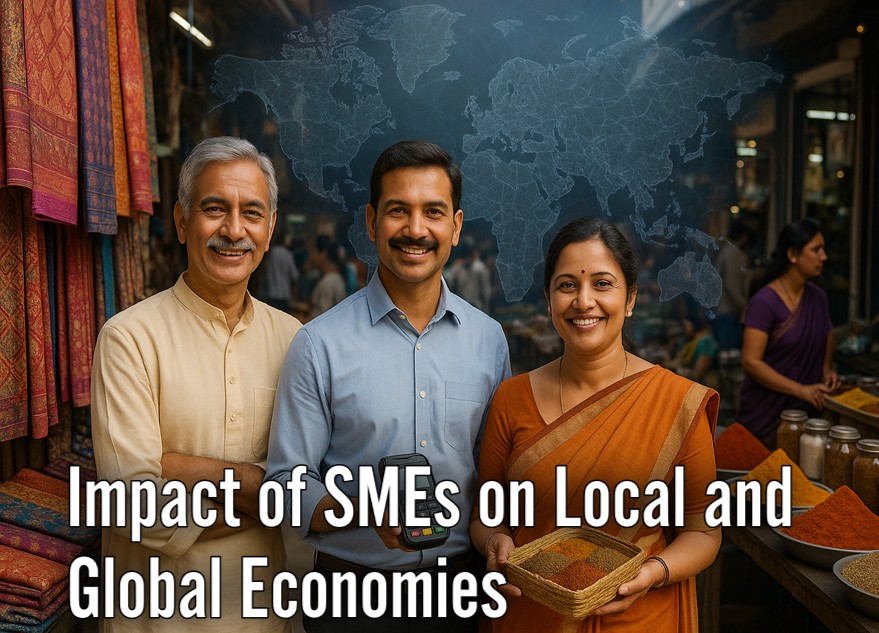
Behind almost every growing city, busy marketplace, and rising startup ecosystem, there is one common force quietly driving progress — SMEs. These businesses may not always dominate headlines, but they create jobs, support local communities, fuel innovation, and keep economies moving every single day. Recent OECD reports show that SMEs make up nearly 99% of businesses worldwide and contribute significantly to employment and economic activity across countries.
From neighborhood cafés and retail stores to tech startups and export businesses, the growing importance of SMEs now extends far beyond local markets. Their influence can be seen in both regional development and global trade. This blog explores the real impact of SMEs on local and global economies and why these businesses continue shaping the future of economic growth.
Source: OECD
💡 Are you looking for Coworking space in Gurgaon, Noida or Delhi?. We are just a call away.
Call now: 08999 828282
What Are SMEs and Why Do They Matter to Economic Growth
Small and medium enterprises (SMEs) are businesses that operate on a smaller scale than large corporations. From local stores and startups to service firms and manufacturers, SMEs play a major role in business activity worldwide. The growing importance of SMEs is evident in job creation, innovation, and regional growth.
- Create Jobs: SMEs employ millions of people across industries and help reduce unemployment at the local level.
- Support Local Economies: Small businesses keep money circulating within communities by working with nearby suppliers and service providers.
- Encourage Entrepreneurship: SMEs make it easier for people to start businesses and turn ideas into income opportunities.
- Contribute to GDP: The strong SMEs’ contribution to GDP shows how these businesses support national economic growth.
- Drive Innovation: SMEs adapt quickly to market trends and often introduce new products, services, and digital solutions.
12 Best Impact of SMEs on Local and Global Economies
The impact of SMEs on the economy extends far beyond small-business ownership. SMEs support employment, innovation, trade, and regional development, making them a major force behind economic growth worldwide.
The following impacts illustrate why SMEs remain among the strongest drivers of economic activity worldwide.
| Impact of SMEs | Economic Benefit |
| 1. Job Creation | Generates employment across sectors |
| 2. Local Business Growth | Supports nearby vendors and communities |
| 3. Innovation | Encourages new ideas and faster adaptation |
| 4. GDP Contribution | Strengthens national economic output |
| 5. Export Growth | Expands global trade participation |
| 6. Entrepreneurship | Encourages independent business ownership |
| 7. Regional Development | Creates opportunities in smaller cities |
| 8. Supply Chain Support | Helps large industries operate efficiently |
| 9. Digital Adoption | Promotes technology-driven growth |
| 10. Economic Stability | Reduces dependence on large corporations |
| 11. Inclusive Growth | Supports diverse entrepreneurs and startups |
| 12. Sustainable Practices | Encourages eco-friendly business operations |
1. Job Creation
SMEs create employment opportunities across retail, hospitality, logistics, technology, and manufacturing. Many people begin their careers in small businesses before advancing professionally.
Example: A neighborhood café may hire local chefs, servers, delivery staff, and cashiers.
2. Local Business Growth
Small businesses help nearby suppliers and service providers grow together. This keeps business activity active within the same community.
Example: A local boutique working with nearby printers, tailors, and packaging vendors.
3. Innovation
SMEs usually adapt quickly when customer needs change. They often introduce fresh products and services faster than larger companies.
Example: A startup launching eco-friendly skincare products for conscious buyers.
4. GDP Contribution
Thousands of SMEs together contribute strongly to national income and industrial output. Their combined business activity supports economic growth.
Example: Small manufacturing units contributing to India’s MSME production sector.
5. Export Growth
Many SMEs now sell products globally through e-commerce and online marketplaces. This helps increase international trade participation.
Example: A handmade décor brand shipping products overseas through Etsy.
💡 Are you looking for Coworking space in Gurgaon, Noida or Delhi?. We are just a call away.
Call now: 08999 828282
6. Entrepreneurship
SMEs encourage people to build businesses independently and create opportunities for others as well.
Example: A freelance designer starting a small creative agency with a growing team.
7. Regional Development
SMEs bring jobs and investment to smaller cities and towns instead of concentrating growth only in metro areas.
Example: A food-processing unit creating employment in a tier-2 city.
8. Supply Chain Support
Large industries often rely on SMEs for packaging, transportation, maintenance, and technical support services.
Example: Small auto-parts companies supplying components to major car manufacturers.
9. Digital Adoption
More SMEs now use online payments, cloud software, and digital marketing to improve daily operations.
Example: A local bakery is increasing orders through food delivery apps and Instagram.
10. Economic Stability
A strong SME sector helps economies stay balanced because business activity is spread across many companies.
Example: Local stores and service businesses continue operations during market slowdowns.
11. Inclusive Growth
SMEs create opportunities for women entrepreneurs, family-run businesses, and first-time founders.
Example: A home kitchen business growing into a full-time catering service.
12. Sustainable Practices
Many SMEs are slowly shifting toward sustainable packaging, local sourcing, and eco-friendly operations.
Example: A clothing brand using recycled fabric and reusable packaging.
Are you looking for Coworking space in Gurgaon, Noida, or Delhi?. We are just a call away.
Call now: +91-8999-828282
How Policy Support Can Maximize SME Economic Contribution?
Government schemes can make a big difference in how fast SMEs grow and compete. Better financing options, digital access, and simpler regulations help small businesses operate smoothly and contribute more to the economy.
- Better Loan Access: MSME loans, grants, and startup funding help businesses expand without heavy financial stress.
- Stronger Digital Support: Online payments, e-commerce, and cloud tools help local SMEs reach more customers and improve daily operations.
- Simpler Business Processes: Easier registrations and reduced paperwork encourage more entrepreneurs to start businesses.
- Skill Development Programs: Training initiatives help SME owners improve business management, digital skills, and workforce productivity.
- Export Opportunities: Government-backed export programs help SMEs enter global markets and increase the overall SMEs contribution to GDP.
Supportive policies continue improving SMEs and economic growth by helping small businesses scale with fewer barriers.
Future Outlook of SMEs in the Global Economy
The future looks promising for SMEs as digital tools and global connectivity continue changing how businesses operate. From e-commerce and AI-powered systems to remote work and online services, SMEs now have more opportunities to reach customers beyond their local markets. Businesses that adapt quickly to technology and changing consumer behavior are likely to grow faster in the coming years. This growing shift will further strengthen the importance of SMEs and their role in SMEs and economic growth worldwide.
Conclusion
The overall impact of SMEs on local and global economies continues to grow every year. From creating jobs and supporting innovation to improving regional development and exports, SMEs remain one of the strongest pillars of economic progress.
Businesses today also need flexible infrastructure to grow efficiently. That is where The Office Pass (TOP) helps startups and SMEs with modern coworking spaces, professional office environments, and scalable workspace solutions designed for growing teams.
Contact TOP at +91-8999-828282 to explore flexible workspace solutions for your business growth.
💡 Are you looking for Coworking space in Gurgaon, Noida or Delhi?. We are just a call away.
Call now: 08999 828282
FREQUENTLY ASKED QUESTIONS (FAQS):
Question: What is an SME?
Answer: An SME, or Small and Medium Enterprise, refers to businesses with a limited number of employees and turnover. These companies play a crucial role in the economy by driving innovation, creating jobs, and contributing to GDP.
Question: How do SMEs impact the local economy?
Answer: SMEs impact the local economy by generating employment, fostering community development, and contributing to local supply chains. Their presence boosts economic diversity and resilience, making communities less dependent on large corporations.
Question: What is the impact of SMEs on the global economy?
Answer: SMEs contribute to the global economy by participating in international trade, driving innovation, and influencing global supply chains. Their agility and adaptability allow them to respond to global market demands, fostering economic growth worldwide.
Question: How do SMEs impact innovation in the economy?
Answer: SMEs drive innovation by developing new products, services, and business models. Their flexibility and willingness to take risks make them key players in introducing new ideas that can transform industries and economies.
Question: Why is the impact of SMEs on the economy important?
Answer: The impact of SMEs on the economy is important because they are a major source of employment and innovation. Their ability to adapt quickly to market changes ensures economic stability and growth, making them vital to both local and global economies.
Question: What challenges do SMEs face that affect their impact on the economy?
Answer: SMEs often face challenges such as limited access to finance, regulatory hurdles, and competition from larger firms. These obstacles can limit their ability to grow and fully realize their potential impact on the economy.
Question: How can governments support the impact of SMEs on the economy?
Answer: Governments can support the impact of SMEs by providing access to finance, reducing regulatory burdens, and offering incentives for innovation. Supportive policies can help SMEs thrive, enhancing their contribution to the economy.
Question: What is the long-term impact of SMEs on the economy?
Answer: The long-term impact of SMEs on the economy includes sustained job creation, continuous innovation, and the promotion of economic resilience. Their ability to adapt and grow ensures they remain a crucial part of both local and global economic landscapes.