

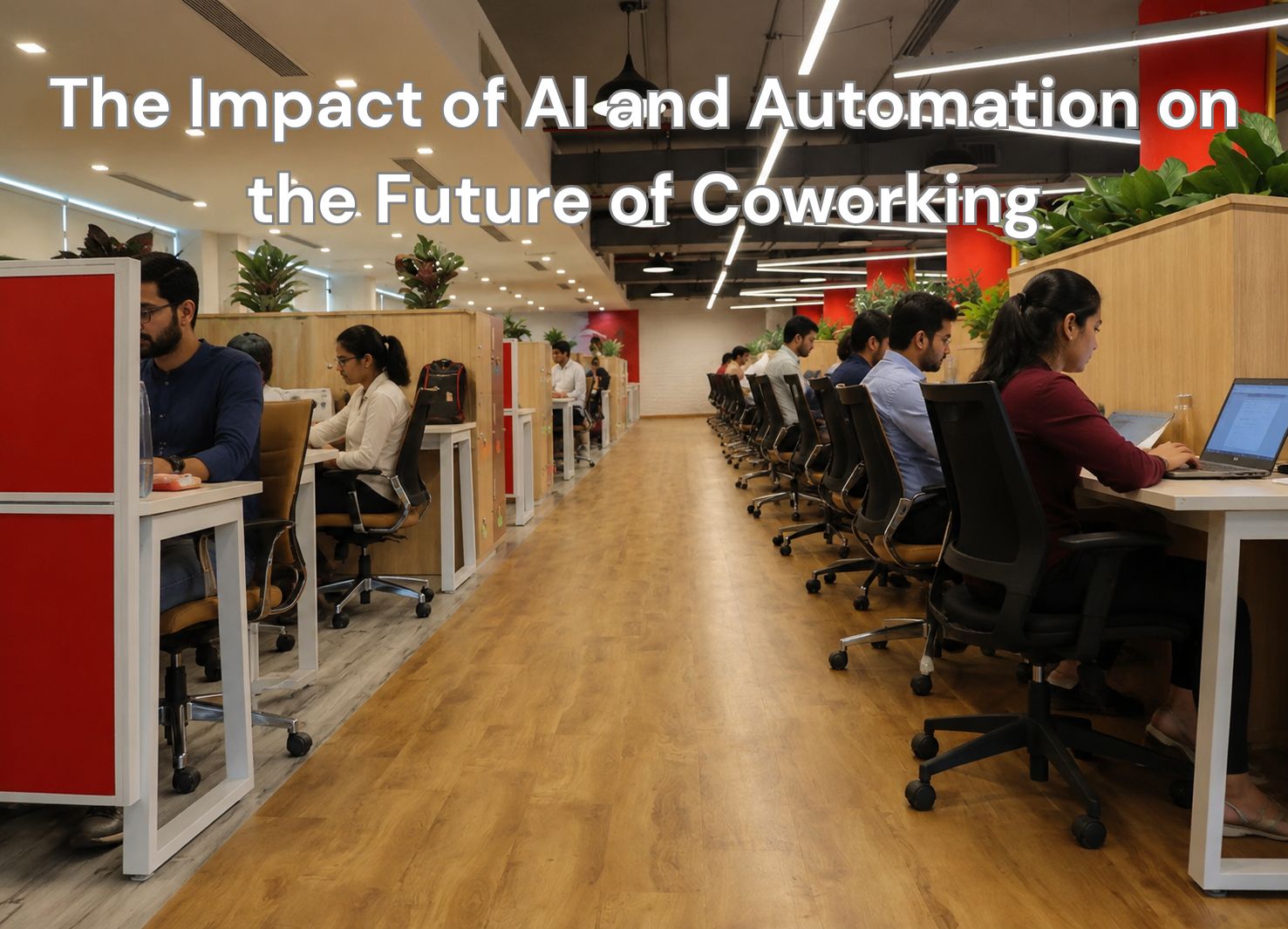
India’s flexible workspace market is expanding rapidly, with around 200 million sq. ft. of flexible office space expected by 2030, according to CBRE India. As businesses embrace hybrid work, smart coworking spaces are increasingly using cowork AI and workplace automation to deliver seamless experiences, improve operational efficiency, and optimize workspace utilization. From AI-powered bookings to intelligent resource management, technology is redefining the future of coworking by creating workplaces that are smarter, more personalized, and better equipped to meet the evolving needs of modern businesses.
Source: CBRE
💡 Are you looking for Coworking space in Gurgaon, Noida or Delhi?. We are just a call away.
Call now: 08999 828282
How AI and Automation Are Transforming the Future of Coworking?
The future of coworking is no longer defined by flexible desks alone. Today, workplace automation and cowork AI are helping operators streamline daily operations, optimize space, and deliver a more personalized member experience.
Picture walking into your workspace where the door unlocks automatically, your meeting room is pre-booked, and AI recommends the best desk based on your schedule. These intelligent experiences are becoming standard in smart coworking spaces.
AI and automation are transforming coworking by:
- Optimizing workspace utilization with real-time occupancy data
- Automating desk, meeting room, and visitor bookings
- Personalizing member experiences through AI recommendations
- Strengthening security with smart access control
- Enabling predictive maintenance to reduce downtime
- Improving energy efficiency with intelligent lighting and HVAC systems
- Supporting smarter decisions using workplace analytics
Together, coworking, AI, IoT, and AI for office management are creating smarter, more efficient workplaces that benefit both operators and members.
Why AI and Automation Matter in Modern Coworking Spaces?
As flexible work becomes the norm, coworking operators face growing expectations. Members want convenience, businesses expect seamless technology, and operators need to maximize every square foot of space. That’s where workplace automation and AI create real value.
Whether it’s a startup with five employees or a multinational managing distributed teams, intelligent systems help deliver a smoother, more productive workday.
10 Biggest Impacts of AI and Automation on the Future of Coworking
As workplace automation and cowork AI continue to evolve, coworking spaces are becoming more intelligent, efficient, and member-centric. Here’s a quick overview of the biggest changes shaping the future of coworking spaces.
| Impact | How AI Makes a Difference |
| 1. Smart space management | Optimizes desk and meeting room utilization |
| 2. Automated booking systems | Simplifies reservations and reduces conflicts |
| 3. AI-Powered Access Control | Enables secure and keywless entry |
| 4. Predictive Maintenance | Prevents equipment failures before they occur |
| 5. Energy Optimization | Reduces electricity and operating costs |
| 6. Personalized Member Experience | Recommends workspaces and services |
| 7. AI Customer Support | Delivers constant 24/7 assistance |
| 8. Workspace Analytics | Helps operators make data-driven decisions |
| 9. Enhanced Security | Detects unusual activities in real time |
| 10. Hybrid Workplace Management | Supports flexible teams across locations |
1. Smart Space Management
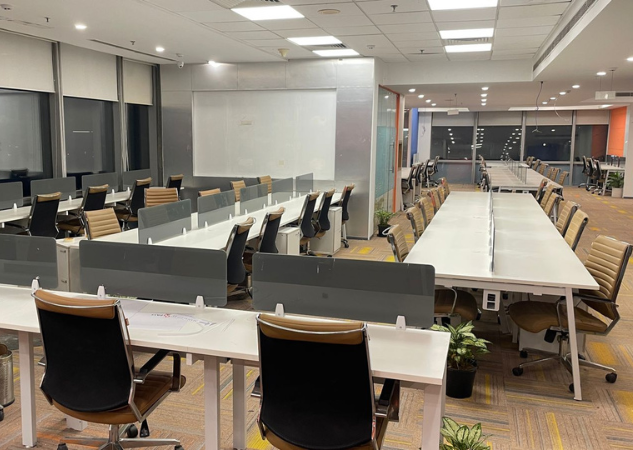
AI analyzes occupancy patterns to ensure every desk, cabin, and meeting room is used efficiently rather than left empty.
Example: A coworking center notices its phone booths are fully occupied every afternoon. AI recommends converting underused lounge space into additional booths.
2. Automated Booking Systems
Members can instantly reserve desks, meeting rooms, parking, or event spaces through mobile apps without manual approvals.
Example: A freelancer books a meeting room minutes before a client arrives, while the system automatically releases unused bookings.
3. AI-Powered Access Control
Modern smart coworking spaces use facial recognition, QR codes, or mobile credentials to provide secure, seamless entry.
Example: A startup employee unlocks the office using their smartphone, while visitors receive temporary digital access that expires automatically.
4. Predictive Maintenance
Instead of waiting for equipment to fail, AI monitors building systems and alerts facility teams before problems disrupt work.
Example: Sensors detect unusual AC performance and schedule maintenance overnight, avoiding discomfort during business hours.
5. Energy Optimization
AI automatically adjusts lighting, air conditioning, and power usage based on occupancy, reducing energy waste.
Example: Empty meeting rooms automatically switch off lights and cooling, lowering monthly electricity bills without affecting comfort.
6. Personalized Member Experiences
Using cowork ai, platforms can recommend desks, meeting rooms, networking events, or amenities based on user preferences.
Example: A content creator who frequently joins virtual meetings receives suggestions for quieter work zones with better acoustic privacy.
7. AI Customer Support
AI chatbots answer common questions around the clock, allowing staff to focus on high-value member interactions.
Example: A new member instantly receives answers about Wi-Fi access, parking, or booking policies—even late at night.
8. Workspace Analytics
Real-time dashboards help operators understand how members use different areas, enabling smarter planning and investments.
Example: Analytics reveal that collaborative spaces are consistently full, prompting management to expand team zones instead of adding more private offices.
9. Enhanced Security
AI-powered surveillance systems detect unusual activity, monitor visitor movement, and enhance workplace safety.
Example: If someone attempts to enter a restricted area after hours, the system immediately alerts security personnel.
10. Hybrid Workplace Management
As hybrid work becomes the norm, AI helps employees reserve workspaces across multiple locations while giving companies visibility into office usage.
Example: A consulting firm with teams in Delhi, Noida, and Gurgaon uses one platform to book desks wherever employees are working that day.
💡 Are you looking for Coworking space in Gurgaon, Noida or Delhi?. We are just a call away.
Call now: 08999 828282
Benefits of AI and Automation for Coworking Operators and Members
AI isn’t just improving technology—it’s making coworking spaces easier to manage and more enjoyable to use. From faster operations to personalized experiences, workplace automation benefits both operators and members.
Whether you’re running a coworking business or working from one, AI delivers measurable value.
- Improves Operational Efficiency: Automates repetitive tasks like bookings, billing, visitor management, and reporting.
- Reduces Costs: Lowers energy usage, minimizes manual work, and prevents expensive equipment failures.
- Maximizes Workspace Utilization: Uses occupancy data to allocate desks and meeting rooms more efficiently.
- Enhances Productivity: Employees spend less time on administrative tasks and more time focusing on meaningful work.
- Strengthens Security: Smart access systems and AI-powered monitoring help protect people and assets.
- Boosts Member Satisfaction: Faster services and personalized experiences encourage renewals and referrals.
Real-life scenario: A startup team books desks, checks in through a mobile app, and receives instant support via an AI chatbot—all within minutes. Meanwhile, the operator manages hundreds of members without increasing administrative staff.
Challenges of Implementing AI in Coworking Spaces
While AI offers significant advantages, successful implementation requires careful planning. Understanding the challenges helps operators maximize long-term value.
- High Upfront Investment: Smart sensors, software, and AI platforms require significant upfront investment.
- Data Privacy Concerns: Member information must be collected, stored, and managed securely.
- Cybersecurity Risks: Connected devices need regular monitoring to prevent cyber threats.
- Staff Training: Employees must learn how to use new AI tools effectively.
- Technology Integration: Existing booking, billing, and access systems should work seamlessly together.
- Ongoing Maintenance: AI systems require updates, monitoring, and occasional upgrades to remain effective.
The good news is that many cloud-based AI solutions now allow coworking operators to adopt automation gradually, making implementation more affordable and scalable.
Best Practices for Adopting AI and Automation in Coworking Spaces
Introducing AI doesn’t have to happen overnight. A phased approach often delivers better results while minimizing disruption.
AI Adoption Checklist:
- Identify repetitive tasks that can be automated first.
- Choose scalable AI tools that can grow with your business.
- Protect member data with strong privacy and cybersecurity practices.
- Train staff to work alongside AI rather than replace existing workflows.
- Monitor occupancy, energy usage, and member feedback regularly.
- Continuously optimize AI systems using real-time performance data.
Tip: Start with high-impact solutions such as automated booking, smart access control, or AI-powered analytics before expanding into more advanced automation.
The Future of AI-Powered Coworking Spaces
The next generation of smart coworking spaces will be more intelligent, connected, and sustainable. AI will move beyond automation to create workplaces that anticipate user needs and continuously optimize operations.
Emerging trends shaping the future:
- Intelligent Buildings that automatically adjust lighting, temperature, and ventilation.
- IoT-Enabled Workspaces with connected devices that improve workplace efficiency.
- Predictive Workplace Management using AI to forecast occupancy and staffing needs.
- Generative AI Assistants that schedule meetings, summarize discussions, and support members.
- AI-Driven Sustainability by reducing energy consumption and minimizing waste.
- Hyper-Personalized Work Experiences based on individual preferences and work habits.
As these innovations become more accessible, the future of coworking spaces will focus on delivering flexible, data-driven workplaces where technology enhances productivity without replacing the human experience.
Conclusion
AI and automation are reshaping coworking spaces, but the future still depends on human connection, collaboration, and flexibility. The right workspace combines smart technology with an environment designed for productivity and growth. At The Office Pass (TOP), professionals and businesses can access flexible coworking spaces across Gurgaon, Delhi, and Noida, supported by modern amenities and a thriving community. As work evolves, TOP helps businesses stay ready for what comes next.
Are you looking for Coworking space in Gurgaon, Noida or Delhi?. We are just a call away. Call now: +91-8999-828282.
FREQUENTLY ASKED QUESTIONS (FAQS):
Question: How is AI changing the future of coworking spaces?
Answer: AI is making smart coworking spaces more efficient by:
- Automating bookings and access
- Optimizing workspace usage
- Personalizing member experiences
- Improving security and facility management
Question: What are the benefits of automation in coworking spaces?
Answer: Workplace automation helps:
- Reduce operational costs
- Save time through automated workflows
- Improve resource utilization
- Enhance member satisfaction with faster, seamless services
Question: How does AI improve workspace management?
Answer: AI analyzes occupancy data to optimize desk allocation, meeting room bookings, energy usage, and maintenance schedules, helping operators maximize every square foot.
Question: Can AI reduce operational costs in coworking spaces?
Answer: Yes. AI lowers costs by automating routine tasks, optimizing energy consumption, preventing equipment failures through predictive maintenance, and improving space utilization.
Question: What challenges do coworking businesses face when implementing AI?
Answer: The most common challenges include:
- Initial implementation costs
- Data privacy and cybersecurity concerns
- Staff training
- Integrating AI with existing systems
- Ongoing software maintenance
Question: How does automation improve the member experience?
Answer: Automation allows members to:
- Book workspaces instantly
- Enjoy contactless check-ins
- Receive faster customer support
- Access personalized workspace recommendations for greater convenience.
Question: What future technologies will shape AI-powered coworking spaces?
Answer: Emerging technologies include:
- Generative AI assistants
- IoT-enabled smart buildings
- Predictive workplace analytics
- Intelligent energy management
- Advanced workplace automation and security systems
Question: Is AI replacing human staff in coworking spaces?
Answer: No. AI automates repetitive tasks, allowing community managers and support teams to focus on building relationships, organizing events, solving complex issues, and delivering a more personalized member experience.