

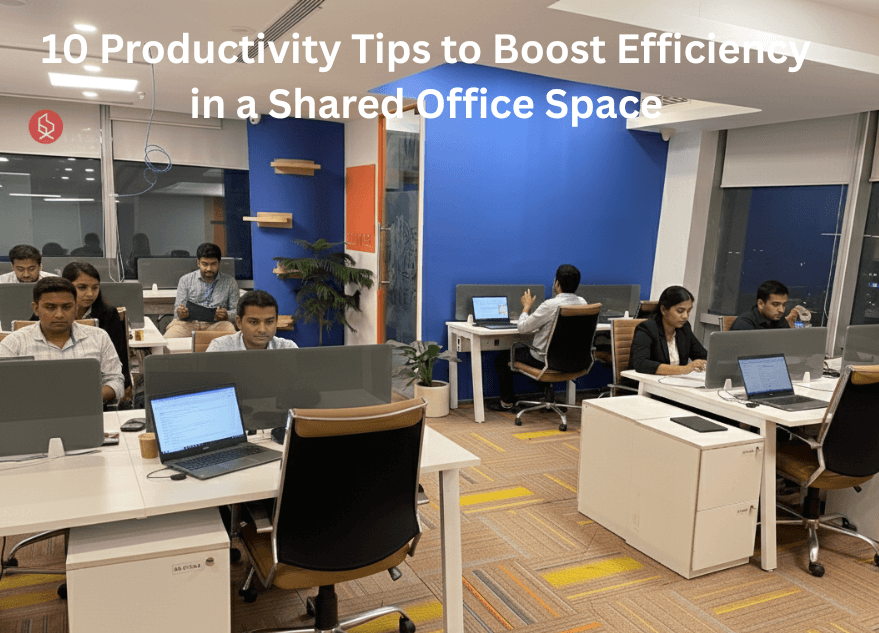
Learning how to boost efficiency in shared office environments transforms your workday from chaotic to controlled. These practical strategies help you reclaim focus, manage distractions, and accomplish more in collaborative workspaces.
💡 Are you looking for Coworking space in Gurgaon, Noida or Delhi? We are just a call away. Call Now: 08999 828282
10 Practical Productive Tips to Boost Efficiency in Shared Office Space
- Create Your Productivity Zone
- Invest in Quality Noise-Canceling Solutions
- Time-Block Your Most Important Tasks
- Leverage Digital Collaboration Tools
- Establish Clear Communication Boundaries
- Organize Shared Resources Systematically
- Design Strategic Break Patterns
- Build Reciprocal Coworking Relationships
- Manage Your Energy Cycles, Not Just Time
- Develop Consistent Closing Rituals
1. Create Your Productivity Zone
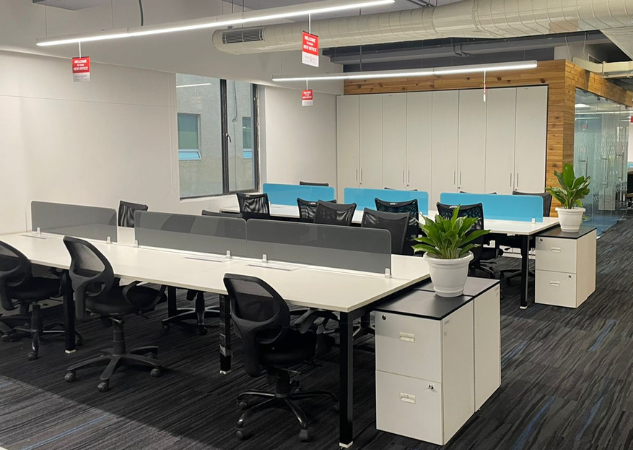
Designate a specific area as your personal workspace and claim it consistently. Arrange essential items within arm’s reach—laptop, notebook, charging cables, and water bottle. Use a small desk organizer to minimize clutter and signal to others that this is your focused work territory. Position your screen to reduce glare and face away from high-traffic areas. This psychological boundary helps your brain transition into work mode faster each morning.
2. Invest in Quality Noise-Canceling Solutions
Background conversations and keyboard clicks derail concentration in shared spaces. Purchase noise-canceling headphones that block ambient sound without requiring loud music. Create a productivity playlist with instrumental tracks or white noise that maintains focus without distracting lyrics. Establish a visual signal—such as wearing headphones—that signals to coworkers you’re in deep work mode. This simple boundary reduces interruptions by 60% according to workspace studies.
3. Time-Block Your Most Important Tasks
Schedule your cognitively demanding work during your peak energy hours, typically morning for most professionals. Block 90-minute focus sessions on your calendar and treat them as unmovable appointments. Communicate your availability windows to teammates so they know when to approach you. Complete routine tasks, such as emails, during naturally lower-energy afternoon periods. This strategic scheduling protects your best mental resources for high-value projects.
Also Read: Drawing The Fine Balance Between Coworking And Productivity
4. Leverage Digital Collaboration Tools
Reduce unnecessary meetings by using project management platforms like Asana, Trello, or Monday.com. Share updates asynchronously so teammates can review them at their convenience. Use shared documents for collaborative editing instead of multiple email chains. Set status indicators on Slack or Teams to show when you’re available versus focused. These tools create transparency while preserving everyone’s concentration time.
5. Establish Clear Communication Boundaries
Politely inform coworkers about your preferred communication methods and response times. For urgent matters, specify that they should tap your shoulder or send a direct message. For non-urgent questions, request that they batch them for specific check-in times. Create an auto-responder explaining your focus blocks and when you’ll be available. This proactive approach prevents guilt while training others to respect your productivity needs.
6. Organize Shared Resources Systematically
Implement a clear labeling system for communal supplies, files, and equipment. Return items to designated spots immediately after use to avoid search time. Create a shared digital folder structure that everyone understands and maintains. Schedule brief weekly tidying sessions for the team to reset the space together. This collective responsibility reduces frustration and saves everyone 15-20 minutes per day spent searching for misplaced items.
7. Design Strategic Break Patterns
Step away from your desk every 60-90 minutes to refresh your focus. Take walks outside or in different areas of the building to change your environment. Use break time to connect with coworkers socially, saving relationship-building for designated moments. Try the Pomodoro Technique 25 minutes focused work, 5 minutes rest adapted to your workflow. Regular breaks increase overall output by preventing decision fatigue and sustaining energy.
8. Build Reciprocal Coworking Relationships
Identify others with similar work rhythms and establish informal accountability partnerships. Exchange focus time you watch for interruptions while they work deeply, then switch. Share productivity tips and recommend helpful tools to each other. Celebrate wins together to build motivation and camaraderie. These mutual support systems make shared spaces feel collaborative rather than competitive.
💡 Are you looking for Coworking space in Gurgaon, Noida or Delhi? We are just a call away. Call Now: 08999 828282
9. Manage Your Energy Cycles, Not Just Time
Track when you feel most alert versus drained throughout the week. Schedule creative work during high-energy windows and administrative tasks during lower ones. Fuel with protein-rich snacks that sustain concentration, rather than sugary options that cause a crash. Notice which coworkers energize you and which drain you, and adjust your interaction timing accordingly. Energy management multiplies your effective working hours without adding more time.
10. Develop Consistent Closing Rituals
End each workday with a 10-minute shutdown routine that signals completion. Review what you accomplished and write tomorrow’s top three priorities. Clear your desk space and organize materials for the next morning. Close all browser tabs and applications to start fresh tomorrow. This ritual creates psychological closure, preventing work thoughts from invading personal time and ensuring you arrive refreshed.
Mastering how to boost efficiency in shared office spaces requires intentional systems, not willpower alone. Implement these 10 strategies gradually, starting with the two that address your biggest pain points. Within weeks, you’ll transform scattered workdays into focused, productive sessions that move your entrepreneurial goals forward consistently.
If you’re looking for a workspace that naturally supports productivity, consider The Office Pass (TOP). Designed for modern professionals, TOP offers thoughtfully planned coworking environments, quiet zones, meeting rooms, and a vibrant community that helps you stay motivated every day. Contact TOP at +91-8999-828282 and take the next step toward a smarter, more productive work setup.
FREQUENTLY ASKED QUESTIONS (FAQS):
Question: What’s the best time to arrive at a shared office for maximum productivity?
Answer: Arrive 30-60 minutes before peak hours, typically between 7:30 and 8:30 AM. Early arrival lets you claim preferred spots and complete deep work before distractions begin. You’ll accomplish more in quiet morning hours than during crowded afternoons.
Question: How do I politely deal with chatty coworkers without seeming rude?
Answer: Use the “acknowledge and redirect” technique—briefly engage, then explain your deadline. Wear headphones as a universal “busy” signal and schedule specific social times. Most people respect boundaries when communicated kindly with alternative connection times offered.
Question: What storage solutions work best in shared office environments?
Answer: Invest in a locking desk drawer or portable file box for confidential materials. Use vertical organizers to maximize limited desk space. Keep a personal “go bag” with daily essentials, and use cloud storage such as Dropbox to eliminate the need for physical documents.
Question: Should I use headphones even when not listening to anything?
Answer: Absolutely—headphones serve as a visual “do not disturb” signal, reducing interruptions by half. You don’t need audio playing constantly; the signal alone protects focus time. Alternate between music, ambient sounds, and silence based on task requirements.
Question: How do I balance collaboration with focused individual work?
Answer: Divide your day into “open” and “closed” blocks on your calendar. Make mornings for solo deep work and afternoons for meetings. Communicate your schedule and use color-coding—green means available, red means focus mode for strategic time allocation.
Question: Is working from a shared office more cost-effective than a private office?
Answer: Shared offices typically cost 40-70% less than private rentals while providing similar amenities. You split costs for internet, utilities, and equipment. However, calculate productivity loss from distractions—if interruptions cost billable hours, a quieter space might save money overall.
Question: What technology tools are essential for shared workspace productivity?
Answer: Noise-canceling headphones rank as number one, followed by a laptop privacy screen. Portable chargers prevent productivity gaps, while cloud-based tools like Notion keep teams synchronized. A quality webcam ensures professional video calls. These $200-400 investments pay for themselves through efficiency.
Question: How do I set social boundaries without damaging professional relationships?
Answer: Be consistently friendly during designated break times so you’re approachable. Explain your work style upfront: “I focus best in uninterrupted blocks but love connecting over lunch.” Use positive framing and remember names during social interactions to build stronger connections.
Question: Can I personalize my space in a shared office?
Answer: Most shared offices allow temporary personalization, such as small plants, photos, or motivational quotes. Avoid permanent modifications and use removable items that pack up easily. A personal mug, a desk plant, or an ergonomic cushion makes the space feel yours without claiming territory.
Question: How do I measure if my productivity is actually improving?
Answer: Track completed tasks weekly using apps like Toggl. Compare high-priority items finished versus started each week. Monitor energy levels and count daily interruptions before and after implementing strategies. Measure both output quality and quantity to assess true improvement.