

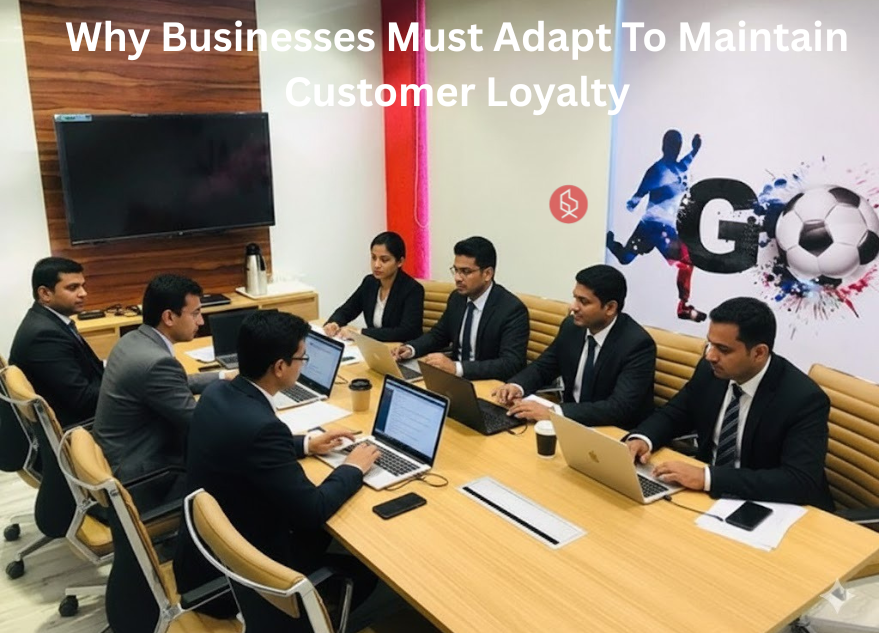
Why Businesses Must Adapt To Maintain Customer Loyalty

Why Businesses Must Adapt To Maintain Customer Loyalty

posted in: Business | 0

In today’s fast-changing market, customer loyalty requires ongoing effort. Businesses that don’t adapt risk losing their most valuable asset: loyal customers.

💡 Are you looking for Coworking space in Gurgaon, Noida or Delhi? We are just a call away. Call Now:   08999 828282

10 Ways Businesses Can Adapt to Maintain Customer Loyalty

  1. The Financial Impact of Customer Loyalty on Your Bottom Line
  2. How to Improve Customer Loyalty Through Personalization
  3. Leveraging Customer Loyalty Programs That Actually Work
  4. Essential Customer Retention Tools for Modern Businesses
  5. Building Trust Through Transparent Communication
  6. Adapting to Changing Customer Expectations in Real-Time
  7. Creating Emotional Connections Beyond Transactions
  8. The Role of Employee Experience in Customer Retention
  9. Using Customer Feedback to Drive Adaptation
  10. Measuring What Matters: Key Loyalty Metrics to Track

1. The Financial Impact of Customer Loyalty on Your Bottom Line

Retaining existing customers costs significantly less than acquiring new ones studies show it’s five to seven times more expensive to attract new customers. Moreover, loyal customers spend more over time, provide valuable word-of-mouth marketing, and offer higher lifetime value to your business. When you prioritize customer loyalty, you’re investing in a more stable, predictable revenue stream that fuels long-term growth.

The Office Pass Gurgaon
The Office Pass (TOP) Managed Office on Golf Course Road, Gurgaon

2. How to Improve Customer Loyalty Through Personalization

Modern consumers crave experiences tailored specifically to their needs and preferences. Personalization goes beyond using someone’s first name in emails it means understanding purchase history, anticipating needs, and delivering relevant recommendations at the right moment. Businesses that leverage data analytics to create individualized experiences see measurably higher retention rates and customer satisfaction scores.

3. Leveraging Customer Loyalty Programs That Actually Work

Successful customer loyalty programs offer more than transactional rewards they create emotional connections and memorable experiences. Instead of generic point systems, consider tiered programs that recognize different levels of engagement, experiential rewards that align with your brand values, or community-building initiatives that foster belonging. The most effective programs make customers feel like valued insiders, not just transaction numbers.

Also Read: 10 Must-Have Tools for Increasing Customer Loyalty

4. Essential Customer Retention Tools for Modern Businesses

Customer retention tools have evolved far beyond basic CRM systems. Today’s businesses benefit from AI-powered analytics platforms that predict churn, automated engagement systems that nurture relationships at scale, and feedback management tools that capture real-time sentiment. Investing in the right technology stack enables you to identify at-risk customers early and intervene with personalized retention efforts before they leave.

5. Building Trust Through Transparent Communication

Trust forms the foundation of lasting customer loyalty, and transparency is its cornerstone. Customers appreciate honesty about product limitations, clear communication about changes, and proactive updates when problems arise. Businesses that communicate openly even when delivering difficult news build stronger relationships than those that hide behind corporate speak or avoid accountability altogether.

6. Adapting to Changing Customer Expectations in Real-Time

Customer expectations evolve constantly, influenced by experiences across all industries, not just yours. A seamless checkout process at one retailer raises the bar for all others. Quick response times from one service provider become the new standard everywhere. To maintain customer loyalty, monitor broader market trends, study best-in-class experiences from various sectors, and be willing to implement changes swiftly.

7. Creating Emotional Connections Beyond Transactions

Transactional relationships rarely inspire loyalty emotional connections do. Customers stick with brands that share their values, support causes they care about, and make them feel part of something meaningful. Consider how your business can contribute positively to customers’ lives beyond your core product or service, whether through community involvement, sustainability initiatives, or simply treating people with genuine care.

8. The Role of Employee Experience in Customer Retention

Your employees are the face of your customer retention strategies, and their experience directly impacts customer loyalty. Engaged, empowered employees provide better service, solve problems more creatively, and build authentic relationships with customers. Businesses that invest in employee satisfaction, training, and development see measurably higher customer retention rates because happy employees create happy customers.

9. Using Customer Feedback to Drive Adaptation

Customer feedback provides the roadmap for adaptation, yet many businesses collect it without taking meaningful action. Implement systematic processes for gathering, analyzing, and responding to customer input across multiple channels. When customers see their suggestions implemented, they feel heard and valued, strengthening their emotional investment in your brand and increasing long-term loyalty.

10. Measuring What Matters: Key Loyalty Metrics to Track

You can’t improve what you don’t measure, making it essential to track the right customer loyalty metrics. Focus on Net Promoter Score to gauge advocacy, Customer Lifetime Value to understand long-term profitability, retention rate to monitor keeping power, and repeat purchase rate to measure engagement. These metrics provide actionable insights that guide strategic decisions and help you adapt your approach effectively.

Maintaining customer loyalty requires consistent adaptation and a deep commitment to understanding what your customers truly need. The brands that win are those that treat loyalty as an ongoing journey one built on listening, evolving, and exceeding expectations. As you work toward improving your customer experience, consider choosing a workspace that supports productivity, collaboration, and growth. 

The Office Pass (TOP) offers warm, affordable, and flexible coworking spaces designed to help businesses deliver their best. To explore a nearby TOP coworking workspace, call +91-8999-828282 and take the first step toward elevating both your team’s performance and your customer relationships.

FREQUENTLY ASKED QUESTIONS (FAQS):

Question: What is the biggest factor affecting customer loyalty today? 

Answer: Personalized experiences and authentic brand values top the list. Modern customers expect businesses to understand their individual needs and demonstrate genuine commitment to shared values beyond just making sales.

Question: How often should businesses update their customer retention strategies? 

Answer: Review your customer retention strategies quarterly at minimum, with monthly check-ins on key metrics. Market conditions and customer expectations shift rapidly, requiring agile responses to maintain effectiveness.

Question: Are traditional customer loyalty programs still effective? 

Answer: Basic points-based programs alone are less effective now. However, when combined with personalization, experiential rewards, and community-building elements, loyalty programs remain powerful retention tools.

Question: What’s the most cost-effective way to improve customer loyalty?

Answer: Focus on improving customer service quality and response times. Answer: These changes require minimal financial investment but significantly impact how valued and respected customers feel.

Question: How can small businesses compete with larger companies on customer retention?

Answer: Small businesses excel through personalized attention, flexibility, and authentic relationships that large corporations struggle to replicate. Leverage your agility and personal touch as competitive advantages.

Question: What role does social media play in customer loyalty?

Answer: Social media enables direct engagement, community building, and responsive customer service. Active, authentic social presence helps humanize your brand and strengthens emotional connections with customers.

Question: How do you measure emotional loyalty versus transactional loyalty?

Answer: Net Promoter Score measures emotional loyalty through likelihood to recommend, while repeat purchase rate indicates transactional loyalty. Customer sentiment analysis from reviews provides additional emotional insight.

Question: Can poor customer retention be reversed?

Answer: Yes, with strategic intervention. Identify root causes through customer feedback, implement targeted improvements, communicate changes transparently, and re-engage lapsed customers with personalized outreach.

Question: What customer retention tools should startups prioritize first?

Answer: Start with a reliable CRM system to track interactions and a feedback collection tool. These foundational customer retention tools provide essential insights without overwhelming limited resources.

Question: How important is sustainability to customer loyalty?

Answer: Increasingly critical, especially among younger demographics. Customers actively choose brands demonstrating environmental and social responsibility, with sustainability often being a deciding factor between competitors.

BOOK A COWORKING TOUR

The Importance of Emotional Intelligence for Entrepreneurs

The Importance of Emotional Intelligence for Entrepreneurs

posted in: Entrepreneur | 0

Running a successful business requires more than a great product, it demands emotional intelligence to lead effectively, navigate human dynamics, and make sound decisions under pressure.

💡 Are you looking for Coworking space in Gurgaon, Noida or Delhi? We are just a call away. Call Now:   08999 828282

10 Reasons Why Emotional Intelligence Is Crucial for Entrepreneurs

  1. Self-Awareness: The Foundation of Entrepreneurial Success
  2. Managing Emotions Under Pressure
  3. Leadership and Emotional Intelligence: An Inseparable Duo
  4. Emotional Intelligence in Decision Making
  5. Building Stronger Client Relationships Through Empathy
  6. Conflict Resolution and Team Dynamics
  7. The Role of EQ in Negotiation and Partnerships
  8. Emotional Intelligence and Business Success: The Connection
  9. Developing Your Emotional Intelligence as an Entrepreneur
  10. Creating an Emotionally Intelligent Organization

1. Self-Awareness: The Foundation of Entrepreneurial Success

Knowing your emotional triggers, strengths, and limitations is the cornerstone of effective leadership. Self-aware entrepreneurs recognize when stress affects their judgment and can pause before making reactive decisions. 

This clarity allows them to leverage their natural abilities while actively working on areas that need improvement, creating a sustainable path for personal and professional growth.

The Office Pass Noida
The Office Pass (TOP) Coworking Space in Noida

2. Managing Emotions Under Pressure

Entrepreneurship delivers constant challenges that test your emotional resilience daily. The ability to stay calm during funding crises, customer complaints, or team conflicts directly impacts your business outcomes. 

Entrepreneurs who master self-regulation make clearer decisions, communicate more effectively, and model the composure they want to see throughout their organization.

3. Leadership and Emotional Intelligence: An Inseparable Duo

Great leaders don’t just direct, they inspire, motivate, and connect. Leadership and emotional intelligence work together to create trust and loyalty within teams. When entrepreneurs demonstrate empathy and understanding, employees feel valued and become more engaged.

This emotional connection transforms ordinary workplaces into communities where people genuinely care about collective success and go the extra mile willingly.

Also Read: The Role of Emotional Intelligence in Retaining Employees

4. Emotional Intelligence in Decision Making

Every business decision carries emotional weight, whether you acknowledge it or not. Emotional intelligence in decision making helps entrepreneurs separate feelings from facts while still honoring their intuition.

By recognizing emotional biases, you can evaluate options more objectively, consider diverse perspectives, and make choices aligned with long-term goals rather than temporary emotional states.

5. Building Stronger Client Relationships Through Empathy

Understanding client needs goes beyond analyzing data and market research. Emotionally intelligent entrepreneurs read between the lines, picking up on unspoken concerns and underlying motivations. This deeper comprehension allows you to tailor solutions that truly resonate, creating loyal customers who become advocates. 

Empathy transforms transactional relationships into meaningful partnerships built on mutual respect and understanding.

6. Conflict Resolution and Team Dynamics

Workplace disagreements are inevitable, but how you handle them determines team cohesion. Entrepreneurs with strong EQ approach conflicts as opportunities for growth rather than threats. 

They listen actively to all perspectives, validate emotions without judgment, and facilitate solutions that address root causes. This approach prevents resentment from festering and builds a culture of open communication.

7. The Role of EQ in Negotiation and Partnerships

Business deals depend heavily on reading people and building rapport. Emotionally intelligent negotiators sense when to push forward and when to step back. They create win-win scenarios by understanding what truly matters to the other party beyond stated positions. 

This skill proves invaluable when forming strategic partnerships, securing investments, or navigating complex stakeholder relationships.

8. Emotional Intelligence and Business Success: The Connection

Research consistently shows that emotional intelligence and business success are strongly correlated. Companies led by high-EQ entrepreneurs demonstrate better financial performance, lower turnover rates, and higher customer satisfaction scores.

The ability to inspire teams, adapt to change, and maintain stakeholder trust creates sustainable competitive advantages that pure technical skills cannot replicate.

💡 Are you looking for Coworking space in Gurgaon, Noida or Delhi? We are just a call away. Call Now:   08999 828282

9. Developing Your Emotional Intelligence as an Entrepreneur

Strengthening your EQ requires consistent, deliberate effort. Start by practicing mindfulness to increase self-awareness and recognize emotional patterns. Seek feedback from trusted mentors, team members, and peers about your leadership style. 

Read widely about human psychology, practice active listening, and reflect regularly on your interactions to identify areas for improvement.

10. Creating an Emotionally Intelligent Organization

Your personal EQ sets the tone, but scaling requires embedding emotional intelligence throughout your company culture. Hire for emotional competencies alongside technical skills, and provide training that develops these abilities. 

Celebrate examples of empathy, collaboration, and constructive conflict resolution. When emotional intelligence becomes a core value, it permeates decision-making at every level and becomes your organization’s defining characteristic.

Emotional intelligence for entrepreneurs isn’t a soft skill, it’s a strategic imperative that shapes everything from team culture to customer loyalty. When you strengthen your EQ alongside technical capabilities, you gain the ability to navigate the human side of business with clarity, empathy, and confidence. The most successful founders know that understanding and managing emotions both their own and others’ creates an advantage no technology or funding can replicate.

If you’re looking for a workspace that elevates your productivity, well-being, and emotional balance, The Office Pass (TOP) offers warm, community-driven coworking spaces designed for modern entrepreneurs. Reach out to TOP at +91 8999 82 82 82 to discover how the right environment can transform not just your work, but your entire entrepreneurial journey.

FREQUENTLY ASKED QUESTIONS (FAQS):

Question: What is emotional intelligence for entrepreneurs?

Answer: Emotional intelligence for entrepreneurs is the ability to recognize, understand, and manage emotions effectively in business contexts, enabling better decision-making, leadership, and relationship management throughout the entrepreneurial journey.

Question: Can emotional intelligence be learned or is it innate?

Answer: While some people naturally have higher EQ, emotional intelligence can absolutely be developed through deliberate practice, self-reflection, feedback, and coaching. It’s a skill set that improves with consistent effort and awareness.

Question: How does EQ impact team productivity?

Answer: High-EQ leaders create psychologically safe environments where team members feel valued and understood, leading to increased engagement, better communication, reduced conflicts, and ultimately higher productivity and innovation across the organization.

Question: What’s the difference between IQ and EQ in business?

Answer: IQ relates to cognitive abilities and technical knowledge, while EQ involves emotional awareness and interpersonal skills. Both are valuable, but EQ often determines how effectively you can apply your intelligence in real-world business situations.

Question: How do I measure my emotional intelligence?

Answer: You can assess your EQ through formal assessments like the EQ-i 2.0 or MSCEIT, seek 360-degree feedback from colleagues, work with an executive coach, or engage in structured self-reflection about your emotional patterns and responses.

Question: Why is self-awareness important for entrepreneurs?

Answer: Self-awareness helps you understand your emotional triggers, recognize biases, make better decisions, leverage your strengths, and manage weaknesses before they undermine your business goals or relationships with stakeholders.

Question: How does emotional intelligence help with investor relations?

Answer: EQ enables you to read investors’ concerns, communicate your vision compellingly, handle rejection gracefully, build trust through authentic interaction, and maintain composure during tough negotiations or challenging questions about your business.

Question: Can high emotional intelligence prevent business failure?

Answer: While EQ can’t guarantee success, it significantly reduces risks by improving decision-making, team dynamics, customer relationships, and your ability to adapt to challenges. Many business failures stem from poor leadership and relationship management.

Question: What role does empathy play in marketing?

Answer: Empathy allows you to deeply understand customer pain points, desires, and motivations, enabling you to create messaging that resonates authentically and develop products or services that truly solve problems your audience cares about.

Question: How can entrepreneurs practice emotional intelligence daily?

Answer: Practice active listening, pause before reacting emotionally, reflect on your feelings and their causes, seek feedback regularly, observe others’ emotional cues, practice perspective-taking, and maintain mindfulness through meditation or journaling consistently.

BOOK A COWORKING TOUR

How to Start a Business with Low Investment?

posted in: Business | 0

Starting a business doesn’t need big capital. With a strong idea and small investment, you can build an income stream and move toward financial independence.

💡 Are you looking for Coworking space in Gurgaon, Noida or Delhi? We are just a call away. Call Now:   08999 828282

10 Steps to Start a Business with Low Investment

  1. Understanding Low-Investment Business Opportunities
  2. Identifying Your Profitable Business Niche
  3. Service-Based Businesses: Your Gateway to Low-Cost Entrepreneurship
  4. Online Business Models That Minimize Startup Costs
  5. Turning Your Hobby Into a Profitable Venture
  6. Leveraging Free and Low-Cost Marketing Strategies
  7. Home-Based Business Ideas With Minimal Overhead
  8. Bootstrapping Strategies to Stretch Your Limited Budget
  9. Building a Business Without Quitting Your Day Job
  10. Scaling Your Low-Investment Business for Long-Term Growth

1. Understanding Low-Investment Business Opportunities

Low investment businesses typically require less than $5,000 to launch, making entrepreneurship accessible to nearly anyone with determination and creativity. These ventures focus on leveraging skills, time, and digital tools rather than expensive infrastructure or inventory. The beauty of starting small lies in reduced financial risk while you test your ideas, build customer relationships, and refine your business model before scaling up.

The Office Pass South Delhi
The Office Pass (TOP) Coworking Space in Delhi

2. Identifying Your Profitable Business Niche

Finding the right low-investment profitable business starts with assessing your existing skills, passions, and market demands. Research gaps in your local community or online spaces where your expertise can solve real problems. Consider industries with recurring revenue potential, such as digital services, consulting, or subscription-based models, which generate consistent income without requiring constant customer acquisition.

3. Identifying Your Profitable Business Niche

Service businesses remain the most accessible way to start a business with low investment since your primary asset is expertise rather than products. Freelance writing, graphic design, virtual assistance, social media management, and consulting require nothing more than a computer and an internet connection. You can begin accepting clients immediately while working from home, eliminating overhead costs like rent, utilities, and commuting expenses.

Also Read: 10 Tips for Starting an Online Business in 2025

4. Online Business Models That Minimize Startup Costs

The digital landscape offers countless low-investment business opportunities, including dropshipping, affiliate marketing, online course creation, and digital product sales. E-commerce platforms like Shopify or Etsy charge lower monthly fees than physical storefronts. Content creation through blogging or YouTube requires just your time initially, with monetization potential growing as your audience expands organically.

5. Turning Your Hobby Into a Profitable Venture

Your existing hobbies and passions can become low-investment, profitable businesses with the right approach. Photography, baking, crafts, tutoring, or fitness coaching already have built-in audiences seeking quality services. Start by offering your skills to friends and family, gathering testimonials and portfolio pieces. Gradually expand through word-of-mouth and social media, investing profits back into better equipment or marketing as your client base grows.

6. Leveraging Free and Low-Cost Marketing Strategies

Building a customer base doesn’t require expensive advertising when you master organic marketing techniques for your low-investment business. Social media platforms offer free business profiles, where consistent, valuable content naturally attracts followers. Email marketing through free tools like Mailchimp, networking in online communities, and asking satisfied customers for referrals cost nothing but time. Local businesses can also benefit from Google My Business listings and from participating in community events.

7. Home-Based Business Ideas With Minimal Overhead

Operating from home dramatically slashes expenses when learning how to start a business with a low investment. Popular options include virtual bookkeeping, pet sitting, meal prep services, online tutoring, and handmade product creation. Your home becomes your office, workshop, or studio, eliminating rent while offering tax-deductible opportunities. Just ensure you comply with local zoning regulations and homeowners’ association rules before launching.

8. Bootstrapping Strategies to Stretch Your Limited Budget

Smart financial management transforms even the smallest budget into a viable business foundation. Start by using free alternatives for paid software Canva instead of Photoshop, Google Workspace instead of Microsoft Office. Barter services with other entrepreneurs, buy used equipment, and focus spending only on revenue-generating activities. Track every expense meticulously and reinvest early profits rather than withdrawing them for personal use.

💡 Are you looking for Coworking space in Gurgaon, Noida or Delhi? We are just a call away. Call Now:   08999 828282

9. Building a Business Without Quitting Your Day Job

The safest approach to launching a low-investment business involves keeping your current employment while building your venture part-time. This strategy provides financial security, allows you to test your business model without pressure, and gives you time to build a customer base gradually. Dedicate evenings and weekends to your entrepreneurial pursuits, setting clear milestones that indicate when you’ve achieved enough stability to transition full-time.

10. Scaling Your Low-Investment Business for Long-Term Growth

Once your low-investment profitable business generates consistent revenue, strategic scaling maximizes your success without proportionally increasing costs. Automate repetitive tasks using affordable software, outsource time-consuming work to freelancers, and develop systems that allow you to serve more customers efficiently. Focus on building passive income streams, creating premium offerings, and establishing your brand authority to command higher prices while maintaining lean operations.

Starting a business with low investment is not only possible—it’s a proven path to financial independence that thousands of entrepreneurs successfully navigate every year. By focusing on service-based models, leveraging digital platforms, and managing your resources wisely, you can build a profitable venture without significant financial risk. The key lies in taking that first step today, staying committed through early challenges, and continuously learning from both successes and setbacks as you grow your entrepreneurial dream into reality.

If you’re looking for an affordable, flexible workspace to kickstart your journey, The Office Pass (TOP) offers community-based coworking offices designed for entrepreneurs like you. Their hassle-free work environment helps you stay productive without the overhead costs of a traditional office.

Take the first step today, stay committed through early challenges, and keep learning as your business grows. To explore workspace options or book a tour, contact TOP at +91-8999-828282.

FREQUENTLY ASKED QUESTIONS (FAQS):

Question: What is the minimum amount needed to start a business with low investment?

Answer: You can start many businesses with as little as $100-$500 for basic essentials like website hosting, business cards, and initial marketing. Service-based businesses often require even less, sometimes just your time and existing equipment like a computer and phone.

Question: Which low investment business is most profitable for beginners?

Answer: Service businesses like freelance writing, virtual assistance, social media management, and consulting typically offer the highest profit margins for beginners. These require minimal startup costs while allowing you to charge competitive rates based on your skills and experience level.

Question: Can I really start a business from home with limited funds?

Answer: Absolutely—home-based businesses eliminate expensive overhead costs like rent and utilities. Popular options include online tutoring, dropshipping, handmade crafts, digital marketing services, and content creation, all of which can be managed entirely from your living space.

Question: How long does it take to become profitable with a low investment business?

Answer: Most low investment businesses can achieve profitability within 3-6 months if you’re consistent with marketing and customer acquisition. Service businesses often generate income faster since you’re trading time for money, while product-based businesses may take longer to build inventory and customer base.

Question: Do I need a business degree to start a low investment business?

Answer: No formal education is required to start a business—practical skills, determination, and willingness to learn matter more than degrees. Countless successful entrepreneurs are self-taught, using free online resources, mentorship, and real-world experience to build thriving businesses.

Question: What are the biggest mistakes to avoid when starting on a tight budget?

Answer: Common mistakes include overspending on unnecessary tools, neglecting market research, underpricing services, lacking a clear marketing plan, and failing to track expenses. Focus on revenue-generating activities first and avoid perfectionism that delays your launch unnecessarily.

Question: Should I register my business immediately or test the idea first?

Answer: Start by validating your business idea with real customers before investing in formal registration. Once you’re generating consistent income and confident in your model, register as a sole proprietorship or LLC to protect yourself legally and establish credibility.

Question: How can I find customers for my new low investment business?

Answer: Leverage free marketing channels like social media, local community groups, networking events, and word-of-mouth referrals. Create valuable content that showcases your expertise, ask satisfied customers for testimonials, and consider strategic partnerships with complementary businesses to expand your reach.

Question: What online tools are essential for running a low-cost business?

Answer: Essential free or low-cost tools include Google Workspace for email and documents, Canva for graphics, social media platforms for marketing, payment processors like PayPal or Stripe, and project management tools like Trello. Invest in paid tools only when they directly increase revenue.

Question: When should I quit my job to focus on my business full-time?

Answer: Transition to full-time entrepreneurship when your business consistently generates at least 6 months of living expenses, you have emergency savings, and your income trend shows steady growth. Rushing this decision creates unnecessary financial stress that can undermine your business success.

BOOK A COWORKING TOUR

How AI Might Blur The Differences Between Small And Medium Enterprises

How AI Might Blur The Differences Between Small And Medium Enterprises

The business landscape is shifting rapidly as AI gives small firms access to capabilities once limited to large enterprises. With AI adoption rising among SMEs, the resource and operational gaps between a five-person startup and a fifty-person company are quickly narrowing.

💡 Are you looking for Coworking space in Gurgaon, Noida or Delhi? We are just a call away. Call Now:   08999 828282

10 Ways AI Reduces the Gap Between Small and Medium Businesses

  1. Democratizing High-Level Customer Support
  2. Hyper-Personalized Marketing on a Budget
  3. Data Analytics for Strategic Decision Making
  4. Streamlining Human Resources and Recruitment
  5. Automating Operational Workflows
  6. Enhancing Financial Management and Forecasting
  7. Access to Global Markets through Localization
  8. Accelerating Product Development and R&D
  9. Leveling the Playing Field in Supply Chain Management
  10. The Agility Advantage

1. Democratizing High-Level Customer Support

Historically, the difference between small and medium enterprises was most visible in customer service; medium firms had dedicated support teams, while small businesses struggled to keep up. AI for SMEs has changed this dynamic entirely. With advanced AI chatbots and virtual assistants, a micro-business can now offer 24/7, multilingual support that rivals larger organizations. These tools handle inquiries instantly, process returns, and answer questions, creating the illusion of a massive support staff without the associated overhead costs.

The Office Pass Gurgaon
The Office Pass (TOP) Managed Office on Golf Course Road, Gurgaon

2. Hyper-Personalized Marketing on a Budget

In the past, executing complex, data-driven marketing campaigns required a medium enterprise’s budget and a team of specialists. Today, generative AI allows small and medium enterprises to automate content creation, from blog posts to social media graphics. AI algorithms analyze customer behavior to deliver hyper-personalized email campaigns that increase conversion rates. This allows a solo entrepreneur to execute marketing strategies with the sophistication and frequency of a fully staffed marketing department, effectively blurring the lines of visibility.

3. Data Analytics for Strategic Decision Making

Data used to be the playground of the big players. Now, accessible AI analytics tools enable small businesses to process vast amounts of data to predict trends and customer preferences. This levels the playing field significantly. A small retailer can now forecast inventory needs with the same precision as a medium-sized competitor. By leveraging data-driven insights, small businesses can make strategic pivots quickly, mimicking the market intelligence that was once exclusive to larger entities.

Also Read: 10 Essential Tools for Small & Medium Size of Businesses

4. Streamlining Human Resources and Recruitment

Recruitment is time-consuming, often requiring a dedicated HR manager- a luxury usually found in medium enterprises. AI adoption in SMEs streamlines this by automating resume screening and candidate sourcing. AI tools can scan thousands of applications to identify top talent based on skills and cultural fit, removing bias and saving hours of manual work. 

This allows small business owners to build high-quality teams efficiently, competing for the same talent pool as larger firms without a dedicated HR department.

5. Automating Operational Workflows

The operational capacity of small and medium enterprises often differs based on headcount. However, AI-driven automation tools (RPA) can handle repetitive administrative tasks like invoicing, data entry, and scheduling. By automating these workflows, a small team can achieve the output volume of a much larger organization. 

This efficiency implies that the size of the workforce is no longer the primary dictator of operational throughput, allowing small firms to scale output without scaling costs.

6. Enhancing Financial Management and Forecasting

Financial stability and complex forecasting were traditionally easier for medium enterprises with CFOs and finance teams. AI for SMEs now offers innovative accounting software that automates bookkeeping, manages cash flow, and predicts financial health. These tools act as a “virtual CFO,” providing small business owners with high-level financial insights and risk assessments. 

This capability ensures that small ventures can manage their finances with the rigor and foresight typically reserved for larger, more established companies.

7. Access to Global Markets through Localization

Expanding globally was a significant hurdle for small businesses due to language barriers and localization costs. The difference between small and medium enterprises regarding global reach is shrinking thanks to AI translation and localization tools. 

These technologies allow small firms to instantly translate websites, marketing materials, and support documents into dozens of languages with high accuracy. A local artisan can now sell to an international audience as seamlessly as a medium-sized exporter.

8. Accelerating Product Development and R&D

Research and Development (R&D) typically requires deep pockets. However, AI tools assist in rapid prototyping, coding, and design, significantly shortening the product development lifecycle. Small tech startups can use AI code assistants to write and debug software faster than a medium-sized team working manually. 

This acceleration allows small businesses to bring innovative products to market at a pace that disrupts larger competitors, proving that innovation is no longer a function of company size.

💡 Are you looking for Coworking space in Gurgaon, Noida or Delhi? We are just a call away. Call Now:   08999 828282

9. Leveling the Playing Field in Supply Chain Management

Managing a complex supply chain requires resources that small and medium enterprises often struggle to balance. AI-powered supply chain tools help small businesses predict delays, optimize routes, and dynamically manage inventory levels. By utilizing predictive algorithms, small firms can negotiate better rates and ensure product availability just as effectively as medium enterprises. 

This efficiency reduces the cost per unit and improves reliability, removing a traditional advantage of larger-scale operations.

10. The Agility Advantage

While AI gives small businesses “big” capabilities, it also enhances their natural agility. Medium enterprises often have layers of approval that slow down AI adoption in SMEs. Small businesses can integrate new AI tools overnight. This combination of high-tech capability and low-bureaucracy speed allows small firms to outmaneuver medium-sized competitors. 

They can adapt to market changes instantly, using AI to pivot strategies while larger organizations are still scheduling meetings to discuss them.

The rapid rise of artificial intelligence is fundamentally rewriting the rules of business hierarchy. By providing affordable access to enterprise-grade tools, AI is effectively erasing the resource-based disadvantages that once defined the difference between small and medium enterprises. For the aspiring entrepreneur, this means the barrier to entry is lower than ever; with the right AI tools, a small business can operate with the power, reach, and efficiency of a much larger organization.

Suppose you’re an entrepreneur or a growing business looking to adopt AI without complexity. In that case, The Office Pass (TOP) can support you with flexible, hassle-free workspace solutions that keep your team productive and collaboration-ready.

Contact The Office Pass (TOP): +91-89998-28282 to explore nearest coworking options and enhance your business operations with an innovative, professional work environment.

FREQUENTLY ASKED QUESTIONS (FAQS):

Question: What exactly is the difference between small and medium enterprises?

Answer: Traditionally, the difference between small and medium enterprises is defined by headcount and revenue. Small enterprises usually have fewer than 50 employees and lower revenue caps, while medium enterprises can have up to 250 employees (depending on the region) and higher revenue. However, AI is making these distinctions less relevant by allowing small teams to generate high revenue and output.

Question: Why is AI adoption in SMEs considered a game-changer?

Answer: AI adoption in SMEs is revolutionary because it decouples output from headcount. It allows small businesses to automate tasks that previously required human employees, such as customer support or data analysis. This means a small business can grow and scale its operations significantly without the heavy financial burden of hiring a massive workforce, increasing profitability and competitiveness.

Question: Is AI for SMEs too expensive for a beginner with a low budget?

Answer: Not at all. The market for AI for SMEs is highly competitive, leading to very affordable pricing models. Many powerful AI tools operate on a “freemium” or low-cost monthly subscription basis (SaaS). This accessibility ensures that even boot-strapped startups can access the same high-quality technology as established medium-sized companies without needing a large upfront capital investment.

Question: Will AI replace the need for human employees in small businesses?

Answer: AI is unlikely to replace humans entirely; instead, it augments human capabilities. It handles repetitive, mundane tasks, freeing up the business owner and employees to focus on creative, strategic, and relationship-building activities. In small and medium enterprises, this means the existing team becomes more productive and satisfied, focusing on high-value work rather than administrative drudgery.

Question: Do I need technical coding skills to use AI tools?

Answer: No, you do not need coding skills. Most modern AI tools designed for small and medium enterprises are built with “No-Code” or “Low-Code” interfaces. They feature drag-and-drop functionality and intuitive dashboards. Whether it is a chatbot, a marketing design tool, or an analytics platform, they are specifically designed for business owners, not software engineers.

Question: How does AI help in competing with medium-sized competitors?

Answer: AI helps you compete by increasing your speed and quality of service. For example, a medium enterprise might take days to analyze market data, whereas an AI tool can give a small business those insights in seconds. This allows you to react to trends faster. Additionally, AI ensures your customer service and marketing look just as professional as a larger firm’s.

Question: What are the risks of using AI for my small business?

Answer: The main risks involve data privacy and over-reliance. It is crucial to ensure that the AI tools you use comply with data protection regulations (like GDPR). Also, rely on AI for data and drafts, but always apply human judgment for final decisions. Small and medium enterprises must maintain a personal touch, which is often their unique selling proposition.

Question: Can AI really help with creative tasks like writing and design?

Answer: Yes, Generative AI is exceptionally good at creative tasks. It can draft blog posts, design logos, create social media captions, and even edit videos. For small and medium enterprises without a budget for creative agencies, these tools provide a “good enough” to “excellent” baseline that can be polished by the business owner, saving thousands of dollars in outsourcing fees.

Question: How do I choose the right AI tools for my business?

Answer: Start by identifying your biggest bottleneck. Is it answering emails? Creating content? Managing inventory? Look for AI for SMEs that specifically address that pain point. Read reviews, look for tools that offer free trials, and ensure they integrate well with the software you already use (like your email or accounting platform). Start small with one tool and expand.

Question: What is the future of small and medium enterprises with AI?

Answer: The future is a “hybrid” business model where the line between sizes blurs further. We will see “Micro-Multinationals”—very small teams using AI to operate globally. The success of small and medium enterprises will depend less on how many people they employ and more on how effectively they utilize AI to optimize their operations and serve their customers.

BOOK A COWORKING TOUR