

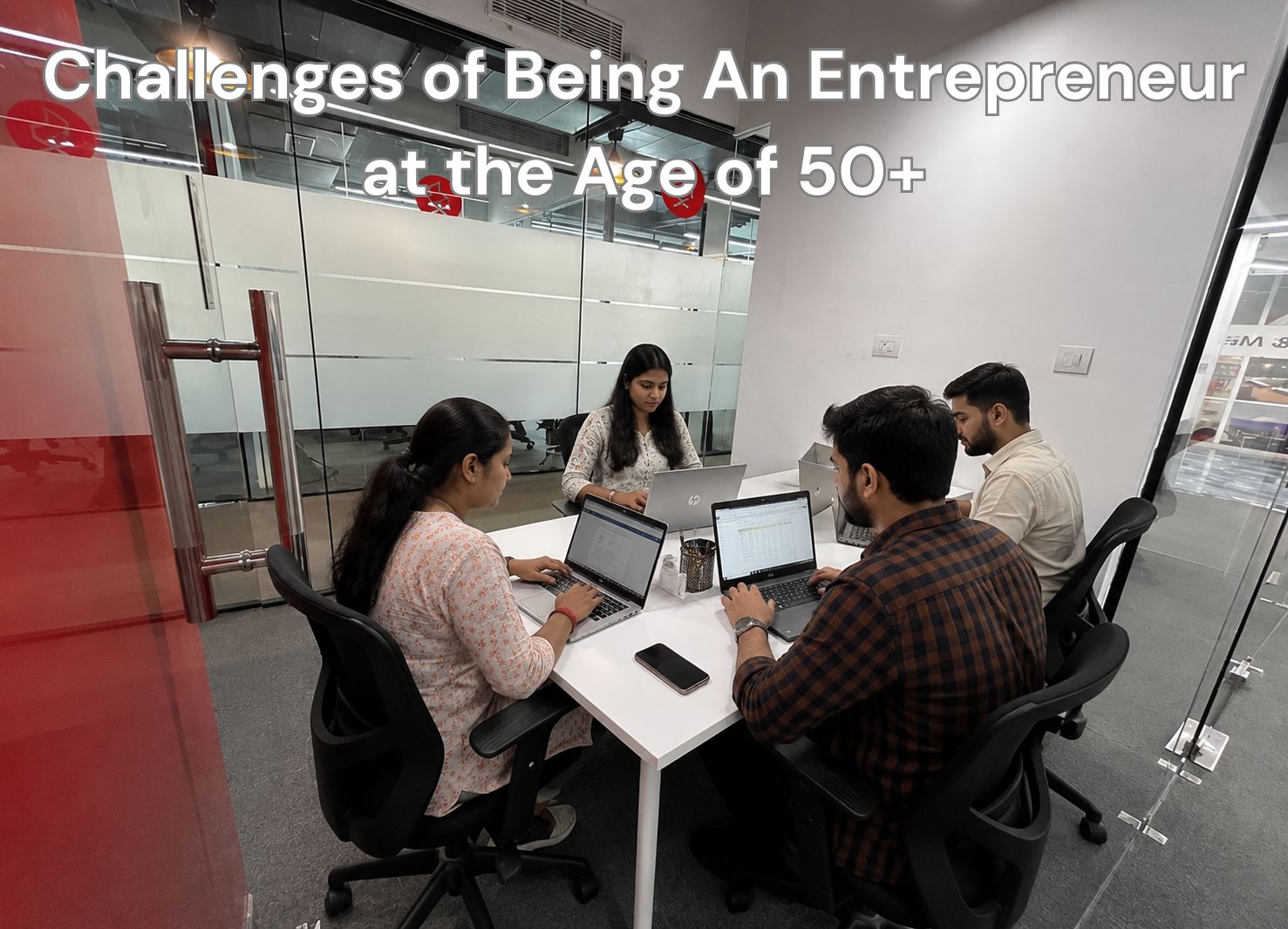
Starting a business after 50 may feel like stepping into unfamiliar territory, but experience can be a powerful advantage. India’s startup ecosystem is among the world’s largest, and the entrepreneurial landscape continues to create opportunities across technology, consulting, retail, professional services, and local businesses. Yet, while younger founders often receive more attention, older entrepreneurs bring industry knowledge, stronger networks, and practical decision-making skills to the table. The journey still comes with real hurdles. Understanding these challenges faced by entrepreneurs can help you prepare, adapt, and build with greater confidence.
Source: Startup India – Indian Startup Ecosystem
Is 50 a Good Age to Start a Business?
No. Starting a business after 50 may actually offer advantages that are difficult to build early in a career.
A professional who has spent 25 years in logistics may understand supply-chain problems better than a new entrant. A former HR leader may recognize the hiring challenges faced by small businesses. These insights can become the starting point for a practical, customer-focused venture.
However, age and entrepreneurship also bring unique considerations. An entrepreneur over 50 may need to manage financial security, family responsibilities, changing technology, and market perceptions more carefully. The right approach is not to ignore these challenges but to plan for them.
💡 Are you looking for Coworking space in Gurgaon, Noida or Delhi? We are just a call away.
Call now: 08999 828282
Why More People Are Choosing Entrepreneurship After 50
More people are starting businesses later in life because experience, flexibility, and longer working lives are changing how careers evolve.
- Career transitions: Many professionals want greater control after leaving corporate roles.
- Financial independence: A business can create an additional income stream and long-term value.
- Passion projects: Years of experience may inspire people to pursue meaningful ideas.
- Consulting opportunities: Industry expertise can be turned into specialized services.
- Longer life expectancy: Many people see their fifties as a new professional chapter, not an endpoint.
10 Biggest Challenges Faced by Older Entrepreneurs in India
Starting a business later in life brings valuable experience, but these common challenges can affect how confidently and efficiently older entrepreneurs build and grow their ventures.
| Challenge | Why It Matters? | What Can Help? |
| Financial risk | Savings and future goals may be involved | Start lean and test demand |
| New technology | Digital tools evolve quickly | Learn business-relevant tools |
| Age bias | Experience may be underestimated | Lead with results |
| Building networks | Old contacts may not fit the venture | Join founder communities |
| Access to funding | Investors may want proof of growth | Build early traction |
| Family commitments | Work and home may overlap | Set clear boundaries |
| Hiring | Startups need flexible talent | Hire gradually |
| Workload | Too many roles can cause burnout | Delegate and automate |
| Customer expectations | Buyer needs change quickly | Gather regular feedback |
| Workspace needs | Home offices may limit growth | Choose a flexible office |
1. Managing Financial Risk
Financial uncertainty is one of the biggest challenges of entrepreneur life after 50. You may be balancing business investment with household expenses, retirement planning, or family needs.
Start with a smaller model, validate customer demand, and avoid unnecessary fixed costs.
Example: A former marketing leader can begin with a small consulting team instead of leasing a large office.

2. Adapting to New Technology
AI tools, digital marketing platforms, online payments, and automation can feel overwhelming. However, you do not need to master every new technology.
Focus on tools that support sales, productivity, customer service, or daily operations.
Example: A traditional retailer can begin with WhatsApp Business and digital payments before adopting advanced software.
3. Overcoming Age-Related Stereotypes
Some people still associate startups with younger founders. An entrepreneur over 50 may face questions about adaptability or growth potential.
Use experience as a business strength. Show your industry knowledge, customer understanding, and ability to solve real problems.
Example: A former manufacturing executive can use long-standing supplier relationships to build a sourcing business.
4. Building a New Business Network
Corporate contacts may be useful, but not every former colleague will become a customer or business partner.
Industry events, founder groups, and coworking communities can help you meet clients, collaborators, and service providers.
Example: A consultant may meet a startup founder at a shared workspace and gain a long-term client.
5. Accessing Funding
Funding is one of the common challenges faced by entrepreneurs, regardless of age. Investors may look for proof that the business has demand and can grow.
A clear business plan, realistic projections, and early customer revenue can improve your chances.
Example: Securing five paying clients before seeking investment can demonstrate market demand.
6. Balancing Family Responsibilities
Many over 50 entrepreneurs manage family responsibilities alongside their businesses. Working from home can make it difficult to separate professional and personal time.
Set defined work hours and create a dedicated work environment.
Example: Working from an office during the day can help you focus on business and keep evenings free for family.
💡 Are you looking for Coworking space in Gurgaon, Noida or Delhi? We are just a call away.
Call now: 08999 828282
7. Hiring the Right Team
Building a startup team is different from managing an established corporate department. Early-stage businesses often need people who can adapt to changing responsibilities.
Hire essential skills first and use freelancers or consultants when needed.
Example: A new agency can maintain a small core team and hire specialists for specific projects.
8. Managing Workload and Energy
Entrepreneurs often handle sales, operations, finances, and customer service at the same time. Trying to do everything alone can affect productivity.
Create systems, automate repetitive work, and delegate tasks that do not need your direct involvement.
Example: Automated invoicing and appointment reminders can reduce administrative work.
9. Keeping Up With Customer Expectations
Customer preferences change quickly. People may expect faster communication, online services, personalized support, and convenient payment options.
Stay close to your customers and use feedback to improve your offering.
Example: A corporate trainer may introduce virtual sessions after clients request more flexible learning options.
10. Finding a Professional Workspace
A home office can reduce costs, but distractions, limited meeting space, and a lack of professional infrastructure may affect business growth.
For older entrepreneurs in India, a flexible coworking space can provide a professional environment without the long-term commitment of a traditional office.
Example: A consulting firm can begin with flexible desks and move into a private office as its team expands.
Advantages Older Entrepreneurs Have Over Younger Founders
Many older entrepreneurs bring strengths that take years to develop. While younger founders may move quickly, an entrepreneur over 50 often has the experience to make more informed choices and manage uncertainty with greater confidence.
- Leadership experience: Years of managing people can help build capable, motivated teams.
- Established networks: Long-term professional relationships may lead to clients, partners, or mentors.
- Industry expertise: Deep knowledge helps identify practical market gaps.
- Financial discipline: Experience can support smarter budgeting and risk management.
- Credibility and resilience: A strong track record can build trust and help founders recover from setbacks.
Practical Tips to Succeed as an Entrepreneur After 50
Success after 50 often comes from combining years of experience with adaptability, careful planning, and a willingness to learn and evolve.
- Build on what you know: Choose a problem connected to your experience.
- Test before investing heavily: Speak with potential customers and validate demand.
- Keep costs flexible: Avoid large fixed expenses during the early stage.
- Use technology strategically: Choose tools that save time or improve customer service.
- Protect personal finances: Keep business and household funds separate.
- Build a diverse network: Connect with mentors, founders, professionals, and younger talent.
- Choose a workspace that can grow with you: Look for flexibility, professional facilities, and a business-focused environment.
The Future of Entrepreneurship for People Over 50
The future looks promising for older entrepreneurs as remote work, digital tools, and flexible business models reduce many traditional barriers. Today, an entrepreneur over 50 can launch a consulting practice, online business, franchise, or creator-led brand without investing heavily in a conventional office. AI can also support marketing, customer service, research, and daily operations. As age and entrepreneurship continue to evolve, experienced founders can combine industry knowledge with new technology to build adaptable, scalable ventures.
Key opportunities include:
- Remote consulting and professional services
- AI-supported digital businesses
- Franchising and niche ventures
- Online courses and creator-led brands
- Flexible coworking and hybrid work models
💡 Are you looking for Coworking space in Gurgaon, Noida or Delhi? We are just a call away.
Call now: 08999 828282
Conclusion
Starting a business after 50 comes with challenges, but experience, industry knowledge, and strong professional networks can become valuable advantages. With careful financial planning, adaptability, and the right support, older entrepreneurs can build sustainable ventures with confidence. A flexible workspace can also make the journey easier. The Office Pass (TOP) provides affordable, ready-to-use coworking spaces designed to support growing businesses. To explore suitable workspace options, contact TOP at +91-8999-828282.
FREQUENTLY ASKED QUESTIONS (FAQS):
Question: Is 50 too old to start a business?
Answer: No. Starting at 50 can offer advantages such as industry experience, professional networks, financial awareness, and stronger decision-making skills.
Question: What are the biggest challenges faced by entrepreneurs over 50?
Answer: Common challenges include financial risk, technology adoption, funding access, age bias, workload management, family responsibilities, and building new business networks.
Question: What are the advantages of becoming an entrepreneur later in life?
Answer: Older entrepreneurs often bring industry expertise, established networks, leadership experience, resilience, practical judgment, and a clearer understanding of customer needs.
Question: Which businesses are suitable for entrepreneurs over 50?
Answer: Consulting, coaching, professional services, franchising, e-commerce, training, and niche businesses can suit entrepreneurs who leverage existing skills and experience.
Question: How can older entrepreneurs adapt to new technology?
Answer: Start with essential tools, take short courses, seek expert support, and use technology that improves productivity, customer service, marketing, or operations.
Question: Is funding harder to obtain after the age of 50?
Answer: Not necessarily. Funding usually depends more on business viability, market demand, revenue potential, financial planning, and founder credibility than age.
Question: How can entrepreneurs over 50 compete with younger startups?
Answer: They can combine industry knowledge with modern technology, customer feedback, strong networks, and flexible workspaces such as The Office Pass (TOP).
Question: What skills are most important for entrepreneurs starting a business after 50?
Answer: Key skills include adaptability, financial planning, digital literacy, leadership, sales, networking, customer understanding, and strategic decision-making.