

In today’s saturated business landscape, simply having a great product or service isn’t enough to guarantee success. Learning how to stand out in a crowded market requires strategic thinking, authentic differentiation, and a deep understanding of what makes your brand truly unique.
💡 Are you looking for Coworking space in Gurgaon, Noida or Delhi? We are just a call away. Call Now: 08999 828282
10 Ways to Make Your Business Stand Out in a Crowded Marketplace
- Understanding Your Unique Value Proposition
- How To Differentiate Your Business Through Brand Storytelling
- Delivering Exceptional Customer Experiences
- Leveraging Niche Specialization
- Building a Distinctive Brand Identity
- Creating Content That Educates and Inspires
- Innovating Your Product or Service Offerings
- Cultivating Strategic Partnerships
- Implementing Transparent Business Practices
- Optimizing Your Digital Presence
1. Understanding Your Unique Value Proposition
Before implementing business differentiation strategies, you need clarity on what sets you apart. Your unique value proposition isn’t just what you do it’s how you solve problems differently than anyone else. Conduct a candid competitor analysis and identify market gaps your business can fill. When you articulate this clearly, customers immediately understand why they should choose you over alternatives.

2. How To Differentiate Your Business Through Brand Storytelling
Storytelling transforms transactions into relationships. Instead of listing features, share the journey behind your business the challenges you faced, the mission that drives you, and the impact you create. People connect with authentic narratives that resonate emotionally. Your story becomes a powerful differentiator that competitors simply cannot replicate, building loyalty that transcends price comparisons.
3. Delivering Exceptional Customer Experiences
Outstanding service is one of the most effective ways to stand out in a crowded market. Every interaction from initial inquiry to post-purchase follow-up should exceed expectations. Train your team to anticipate needs, personalize communications, and proactively resolve issues. When customers feel genuinely valued, they become vocal advocates who amplify your brand through word-of-mouth recommendations.
Also Read: How to Create a Customer-Centric Strategy for Your Business?
4. Leveraging Niche Specialization
Rather than trying to serve everyone, dominate a specific niche where you can become the undisputed expert. Specialization allows you to tailor your messaging, develop more profound expertise, and command premium pricing. Businesses that try to appeal to broad audiences often get lost in the noise. Conversely, niche players build devoted followings by speaking directly to specific pain points and desires.
5. Building a Distinctive Brand Identity
Visual consistency and memorable branding create instant recognition in crowded markets. Invest in professional design that reflects your personality from your logo and color palette to your website and packaging. Your brand identity should communicate your values at a glance. Consistency across all touchpoints reinforces credibility and makes your business immediately recognizable among countless competitors.
6. Creating Content That Educates and Inspires
Content marketing establishes you as a thought leader while providing genuine value to your audience. Share insights, solve common problems, and address questions your customers actually ask. Whether through blogs, videos, podcasts, or social media, consistent educational content builds trust and positions your business as the go-to resource. This approach attracts customers who are already primed to appreciate your expertise.
7. Innovating Your Product or Service Offerings
One of the most direct business-differentiation strategies is continuous innovation. Listen to customer feedback and identify unmet needs within your industry. Even minor improvements better packaging, faster delivery, additional features can create meaningful separation from competitors. Innovation doesn’t always require groundbreaking inventions; sometimes incremental enhancements deliver the most impactful differentiation.
8. Cultivating Strategic Partnerships
Collaborating with complementary businesses expands your reach and adds value for customers. Strategic partnerships allow you to offer bundled services, cross-promote to new audiences, and enhance your credibility through association. Look for businesses that share your values but serve adjacent markets. These alliances create win-win scenarios that help both parties stand out in their respective crowded markets.
💡 Are you looking for Coworking space in Gurgaon, Noida or Delhi? We are just a call away. Call Now: 08999 828282
9. Implementing Transparent Business Practices
Transparency builds trust in an era of skepticism. Share behind-the-scenes glimpses of your operations, be honest about challenges, and openly communicate your values and practices. Customers increasingly support businesses that demonstrate integrity and authenticity. When you operate with transparency, you differentiate yourself from competitors who hide behind corporate facades and generic messaging.
10. Optimizing Your Digital Presence
Your online presence often provides the first impression of your business. Ensure your website is user-friendly, mobile-optimized, and clearly communicates your value proposition. Maintain active social media profiles where you engage authentically with your community. Positive reviews, compelling visuals, and search engine optimization all contribute to digital differentiation. A strong online presence ensures potential customers discover and remember you.
Conclusion
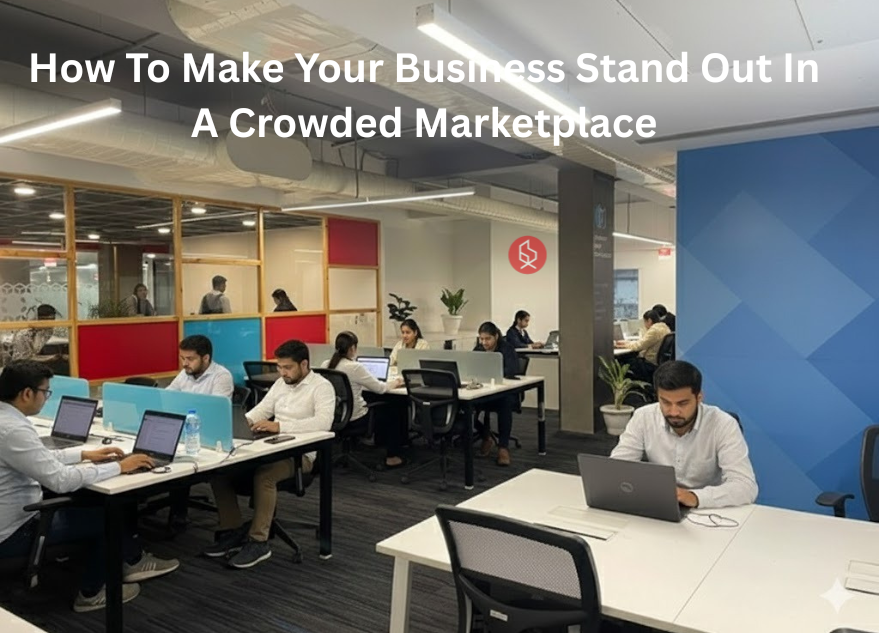
Standing out in a crowded marketplace requires more than strategy alone it takes the right environment to turn ideas into action. That’s where The Office Pass (TOP) comes in. Designed for modern businesses and professionals, TOP offers flexible, fully serviced workspaces that support focus, collaboration, and brand growth. Whether you’re refining your value proposition, scaling operations, or building stronger customer connections, the right workspace can give you a real competitive edge. Choose a space that evolves with your business and helps your differentiation strategies deliver real results.
To explore flexible workspace solutions with TOP, get in touch at +91 8999 82 82 82
FREQUENTLY ASKED QUESTIONS (FAQS):
Question: How do I identify what makes my business different from competitors?
Answer: Analyze competitor offerings, survey your customers about why they chose you, and examine your unique processes, values, or expertise. Your differentiation often lies at the intersection of your strengths and unmet market needs.
Question: Can small businesses compete with larger companies in crowded markets?
Answer: Absolutely. Small businesses can leverage agility, personalized service, niche specialization, and authentic community connections that larger corporations struggle to replicate. Focus on strengths that size cannot easily duplicate.
Question: How long does it take to establish differentiation in the marketplace?
Answer: Building meaningful differentiation typically requires 6-18 months of consistent effort. However, you can begin seeing traction within weeks by implementing high-impact changes like improved customer service or distinctive branding.
Question: What’s the difference between a unique selling proposition and differentiation?
Answer: Your unique selling proposition is a specific statement about what sets you apart, while differentiation encompasses all the ways your business distinguishes itself from branding and service to culture and innovation.
Question: Should I focus on price to stand out in a crowded market?
Answer: Competing solely on price is rarely sustainable and attracts price-sensitive customers with low loyalty. Instead, emphasize value, quality, and unique benefits that justify your pricing and build lasting relationships.
Question: How can I measure if my differentiation strategies are working?
Answer: Track metrics like customer acquisition cost, retention rates, brand awareness surveys, customer lifetime value, and unprompted mentions or referrals. Increased engagement and loyalty indicate successful differentiation.
Question: Is it better to differentiate through product features or customer experience?
Answer: Both matter, but customer experience often creates stronger competitive advantages. Features can be copied, while exceptional experiences build emotional connections and loyalty that competitors cannot easily replicate.
Question: How often should I update my differentiation strategy?
Answer: Review your strategy quarterly and make adjustments based on market feedback, competitive changes, and performance data. Major pivots might occur annually, while minor refinements should happen continuously.
Question: Can too much differentiation confuse potential customers?
Answer: Yes. Focus on 2-3 core differentiators that clearly communicate your value. Trying to be different in every way dilutes your message and makes it harder for customers to understand your primary benefits.
Question: What’s the biggest mistake businesses make when trying to stand out?
Answer: Imitating competitors rather than embracing authentic uniqueness. Businesses often copy what seems successful elsewhere instead of identifying and amplifying their own distinctive strengths, values, and approaches.