
The place you choose to run your business from depends on the kind of business you have. Additionally, legal regulations, security concerns, connectivity and the image you wish to portray, play a significant role in the decision. There are both pros and cons of running a business from home. What weighs more heavily on your priority list from the advantages and disadvantages shared below can help you decide.
đź’ˇ Are you looking for Coworking space in Gurgaon, Noida or Delhi?. We are just a call away.
Call now: 08999 828282
5 Advantages of running a business from Residential area
The financial obligations can be better managed, especially in the case of startups with budget constraints. The expenses related to leasing or renting a commercial space can be saved or reduced if the business is run from a residential area.
2. Convenience
If the residential area you choose for business is also your home or close to home, you can save on both time and money. The reduced stress by eliminating the commute to work is a great plus point. It would also offer you more flexibility around work hours.
3. Tax Benefits
You can also benefit from the tax exemptions you qualify for in case of a home office. Depending on your location and tax laws, you may be eligible for certain tax deductions when you operate a business from your home.
4. Low Overhead
The overhead costs, like commercial electricity, can be avoided if your business address is residential. This gives a significant financial savings for a startup.
5. Work-Life Balance
Being at home allows for a better work-life balance and makes it easier to attend to personal matters during the workday.
Many residential areas have rules and regulations which prohibit any commercial activity. Thus, before investing in setting up an office, it is essential to check the legal implications.
2. Limited Space
Operating from a residential area might suit if it is a small startup, but as the team grows, space constraints impact work productivity. Also, a residential area would be impractical for businesses with manufacturing facilities.
3. Professional Image
The professional image operating from a commercial workspace offers is unparalleled. Thus, for businesses which rely on a polished appearance to attract clients, it makes sense to choose a commercial workspace.
đź’ˇ Are you looking for Coworking space in Gurgaon, Noida or Delhi?. We are just a call away.
Call now: 08999 828282
4. Distractions
Although working from home might be convenient, especially if you need to attend to personal matters, the distractions are aplenty. Working from home can be challenging due to potential distractions, such as household chores, family members, or pets.
5. Isolation
The networking opportunity is relatively limited and can be isolating. The social interactions that come with a traditional office environment are missed when working from home.
6. Security Concerns
Depending on your business, there may be security concerns related to having valuable equipment or inventory at home.
7. Neighbor Relations
In case your business generates increased noise, traffic, or other disruptions, your neighbors might complain.
To conclude, running a business from a residential area can be a viable option for small startups and home-based businesses. However, you need to consider the pros and cons before making your choice. A commercial location would serve the purpose better for businesses that require a more professional image or larger facilities.
The Office Pass (TOP) provides coworking space in Delhi, Noida and Gurgaon with amazing amenities includes high-speed internet, hi-tech conference and meeting rooms, a warm work environment and regular tea and coffee. If you are looking for perfect space for setting up your new office in Delhi-NCR then Contact us at 08999 828282 for more information.
FREQUENTLY ASKED QUESTIONS (FAQS):
Question: Is it legal to run a business from a residential area?
Answer:Â Running a business from a residential area is legal only if the regulations in the locality are in favor. While some areas strictly prohibit commercial activities, some may give exceptions to certain business types.
Question: What types of businesses are suitable for a residential area?
Answer:Â Home-based businesses that primarily involve office work, consulting, freelancing, online retail, or creative endeavors like writing or graphic design are often suitable for residential areas. Businesses with minimal customer traffic and noise are generally better suited.
Question: Are there any disadvantages to running a business from home in terms of professionalism?
Answer:Â Yes, operating from a residential area may not project a professional image to clients or customers, which can be a drawback for businesses that rely on a polished appearance to attract and retain clients.
Question: Are there any tax benefits to running a business from home?
Answer:Â Some tax benefits may be available, such as deductions for a home office, but eligibility depends on your specific situation and tax laws in your area. Consult with a tax professional for guidance on maximizing tax benefits.
Question: How can I maintain a work-life balance when running a business home?
Answer:Â Disciplining oneself and setting clear boundaries between work and personal life is essential. Establish specific work hours for a healthy work-life balance, and create a separate workspace within your home.
Solopreneurs often find themselves juggling multiple roles, from marketing and sales to operations and customer service. The workload can become overwhelming, leading to burnout if not appropriately managed.
2. Isolation
Although working alone eliminates distractions, things can get lonely at times. Solopreneurs may feel demotivated and isolated and miss the social interactions of a traditional workplace.
3. Limited Resources
To compete with larger businesses, Solopreneurs need to invest in marketing, technology, and expansion. However, often limited or inadequate financial and human resources make it back-breaking.
4. Time Management
To be a successful Solopreneur, time management skills are a must-have. Juggling too many tasks due to the lack of a team to delegate tasks to, solopreneurs often get stressed for time. This, unfortunately, leads to inefficiency and hinders business growth.
If one has chosen to be a Solopreneur, the unpredictable monetary inflow can cause stress and anxiety. This is especially true for a new venture.
6. Lack of Specialization
Running a business successfully needs expertise in not only the chosen business domain but also in the pillars of legal, accounting, and IT. The absence of sound experts in these can lead to mistakes or inefficiencies.
7. Difficulty Scaling
It might work well to be a Solopreneur when one starts a new venture; however, as the business grows, it becomes imperative that more hands are brought in to scale up and expand the company to its potential.
đź’ˇ Are you looking for Coworking space in Gurgaon, Noida or Delhi?. We are just a call away.
Call now: 08999 828282
8. Market Competition
Finding niche markets to take your unique product or service offerings is the greatest challenge for a Solopreneur.
9. Customer Dependency
For solopreneurs with small ventures, the customer base is usually limited, which is highly volatile. The revenue sources, when limited to a small audience, can be risky.
10. Legal and Regulatory Challenges
Running a business needs statutory compliance. Navigating the legal and regulatory requirements of running a business is not only time-consuming but also requires expert input.
To overcome these challenges and to stay resilient, solopreneurs can seek support through networking. They can assess and prioritize which tasks need their attention and which can be outsourced.
If You are an solopreneur and looking for a coworking space in Noida, Delhi or Gurgaon, So you can prefer TheOfficePass (TOP) neighborhood coworking spaces which is a perfect location for your office. Contact us at 08999 828282 for more details
FREQUENTLY ASKED QUESTIONS (FAQS):
Question: What is a solopreneur, and how is it different from an entrepreneur?
Answer:Â An entrepreneur who runs their business independently, without employees or partners, is called Solopreneur. A Solopreneur does not have a team or co-founder.
Question: How do solopreneurs manage their workload effectively?
Answer: To be able to run a business successfully as a Solopreneur, time management, prioritization, and possibly outsourcing tasks are common strategies. Â
Question: What are the main financial challenges for solopreneurs?
Answer:Â Limited resources and inconsistent income can be challenging. Solopreneurs often struggle with managing cash flow.
Question: What strategies can solopreneurs use to stay motivated and combat loneliness?
Answer:Â Solopreneurs can join networking groups, mastermind sessions, or seek mentors for support. Maintaining a clear vision and setting achievable goals helps with motivation.
Question: What legal and administrative challenges do solopreneurs face?
Answer:Â The legal regulations and compliances like business registration, taxes, and contracts can be challenging for Solopreneurs. In some cases, they might also face intellectual property issues.
Question: What is the best way for solopreneurs to scale their businesses?
Answer:Â Scaling can be challenging for solopreneurs, but it’s possible through strategic partnerships, outsourcing, and automation of repetitive tasks.
Question: How can solopreneurs achieve a work-life balance?
Answer:Â Solopreneurs quite often get burnout. To avoid it and to maintain work-life balance, Solopreneurs can set and maintain boundaries, set work hours, and take regular breaks.
Entrepreneurship and start-up concepts aren’t new in India. When a start-up founder or a business owner initially starts their business, they are accountable for doing several activities from long working hours to juggling between numerous tasks. They are typically considered as a one-man army. However, as soon as you learn to get over these challenges in entrepreneurship, you will certainly be able to enjoy the incentives.
While companies like Paytm and Flipkart are an example of what a startup can attain in a couple of short years, there are certain common problems and challenges of entrepreneurs that almost all entrepreneur encounter while starting a new endeavor. What are the most common difficulties looked by startups?
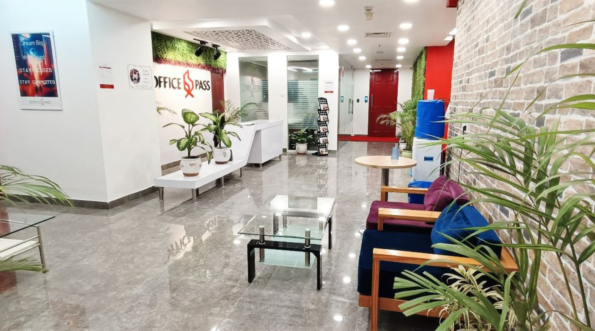
Entrepreneurship is a challenging journey that requires hard work, dedication, and persistence. Here are the 15 common problems faced by entrepreneurs while starting their startup in India as mentioned below. The Office Pass (TOP) Managed Office on Golf Course Road, Gurgaon
Meaning of Entrepreneurship
Entrepreneurship meaning is about creating and running businesses by taking risks and being innovative. It’s not just about starting new ventures but also about adapting to changes and coming up with new ideas. Successful entrepreneurs are creative, resilient, and ready to face challenges. They help the economy grow by introducing new products, creating jobs, and advancing technology. In essence, entrepreneurship meaning is about finding opportunities, taking risks, and turning ideas into successful businesses that benefit society.
15 Top Problems and Challenges Faced by Entrepreneurs in India 2024
Getting funds for your business is one of the main issues that all businesses face and have to tackle to survive. While you might have saved initial money to start a business, it won’t help you survive for long. Steady cash flow is crucial for businesses to endure, and you always need to have extra funds to take care of rainy days.
You need to ensure you have a well-prepared business strategy ahead of time, which consists of funds set aside for the worst-case scenario. Remember, when you are new in business, you will certainly have restricted accessibility of funds, and also hence you have much less room for error.
2. Lack of Planning
It’s impressive the number of start-ups fails since they “failed to remember” to do the planning. Or perhaps they did strategize, yet they did not cover all the bases. Key locations like sales, development, and funding aren’t afterthoughts. They need to all belong to your business plan right from the start. Not just that, however, you require to prepare for the important things you cannot prepare for, also. That is, even if you cannot plan for every possibility, you require to recognize what you’re most likely to do when (not if) events take an unforeseen turn.
đź’ˇ Are you looking for Coworking space in Gurgaon, Noida or Delhi?. We are just a call away.
Call now: 08999 828282
Particular abilities are important not just for your business to endure but for the expansion. Recognizing the specific abilities you require– as well as exactly how to obtain those crucial individuals aboard– could be the identifying consider just how well your start-up grows. Hold-ups in discovering the best employees are expensive. For a small group, the employment procedure consumes important time that could be invested in various other locations of business, yet on the other hand, not having the right people can produce extreme bottlenecks and also delay the rollout of new products or services. This is one of the issues that no start-up can afford, particularly in the early days.
4. Effective Marketing within a Limited Budget
Some start-ups assume they can ignore marketing strategies entirely and hope that word of mouth will be sufficient. Being a start-up, it’s essential to create visibility among your consumers. Effective marketing techniques within a limited budget should be made to reach your target audiences. Yet it’s an incorrect expectation to place your confidence in clients finding you unless you make a collective initiative to grow them with a properly structured strategy to promote your start-up.
5. Self-Doubt and Uncertainty
For first-time entrepreneurs, dealing with the uncertainties of the venture can be a tough task. The entrepreneurs can often feel ultimately responsible for the success or failure of their venture. There are also many detours and deviations from the initial plan. All of this can take a toll on the entrepreneur. The VUCA environment that most new businesses operate in should be accepted as the reality and the changes accepted without much resistance. Entrepreneurs should remain calm and true to their vision.
6. Dealing with Criticism
When you are an entrepreneur, criticism comes as a part and parcel of the job. Every decision of the entrepreneur can be met with criticism by the team, partners, investors, customers, and even their family. Even established entrepreneurs such as Ratan Tata must deal with this. The key in accepting criticism is to separate the waste from the truly helpful feedback that can prove valuable. Once you have evaluated the criticism for its validity, you can even ask to follow-up questions that can help you understand the criticism better. You may even be appreciated for this or find some useful insight.
đź’ˇ Are you looking for Coworking space in Gurgaon, Noida or Delhi?. We are just a call away.
Call now: 08999 828282
7. Attractive Customers
Getting customers for your product or service can be the difference between success and failure for a business. Many businesses have started with powerful ideas however could not survive simply because they failed to reach the right customers. There are several ways of reaching the right customers, however social media and SEO have proven to be useful tools for most. The entrepreneur should invest time in understanding the customer expectations and if needed leverage their network to reach the customers.
8. Making Decisions
Decision-making in a business situation can be daunting, especially when there are so many things riding on each decision. Entrepreneurs can face a dilemma while making a decision, especially when they have limited information. Entrepreneurs must also guard themselves against getting overly involved in decision-making and causing a delay which may delay the progress. They can delegate the smaller decisions to their team of experts and ask them to come up with alternatives before evaluating options and finally deciding.
9. Time Management
Even the best entrepreneurs struggle to manage their time properly. As they take up roles out of their expertise, they can find it challenging to get things done. The challenges often pop up when the entrepreneurs have to deal with conflicting priorities and must let go of their perfectionist streak to move the business process along. Plotting goals and making schedules can be a lifesaver here. All that they need to do is ensure that their smaller goals tie up with the larger goals and your business vision.
10. Office Infrastructure
Your workplace rent and associated costs are the first things that you should look at when you start thinking of cutting costs, especially when starting a new business. Moving to shared coworking space in Noida, Gurgaon and South Delhi will save you approximately 32% on average in rent compared to commercial office space. Coworking spaces allow business owners and start-ups to operate in a fully-equipped workplace without worrying about setting up their own private workplaces. One significant benefit of coworking is that it is the best method to operate in a workplace with minimal financial investment. By operating in a coworking space, you can run your business with fewer expenses as contrasted to setting up a new workplace.
11. Competition
Every business faces competition, and entrepreneurs need to be prepared to compete in a crowded market. They need to differentiate their product or service and find ways to stand out from the competition to succeed in the market.
12. Scaling the Business
Scaling any business can be a challenging and complex process. Entrepreneurs need to plan carefully and make sure they have the right resources and team in place to handle growth.
13. Marketing and Sales
Marketing and sales are critical to the success of any business, but many entrepreneurs struggle with these areas. They may have a great product or service, but if they can’t effectively market and sell it, they won’t be able to grow their business.
💡 SMBs looking for HR, Marketing, Technology and Funding solutions for their business.
Call Hello Jarvis 994 8000 800
14. Legal and Regulatory Compliance
Entrepreneurs must comply with a wide range of legal and regulatory requirements, including tax laws, labor laws, and environmental regulations. Failure to comply with these requirements can result in penalties, fines, and legal action against them.
15. Managing Cash Flow
Cash flow is also a one of the critical factor in the success of any business. Entrepreneurs must be able to manage their cash flow effectively, including budgeting, forecasting, and managing expenses to achieve the success.
How To Overcome Entrepreneurs’ Challenges and Problems?
One of the biggest challenges faced by entrepreneurs is securing sufficient funding. Entrepreneurs should explore various funding sources such as venture capital, angel investors, and crowdfunding to ensure they have enough capital to start and sustain their business.
2. Develop a Strong Business Plan
A clear and detailed business plan can help address many problems faced by entrepreneurs. It provides a roadmap for the business, helps attract investors, and guides decision-making processes.
3. Understand Market Needs
Many startups fail because they do not meet market needs. Entrepreneurs should conduct thorough market research to understand their target audience and tailor their products or services accordingly.
4. Build a Competent Team
Challenges faced by entrepreneurs in India and elsewhere often stem from a lack of skilled personnel. Hiring the right team members with the necessary skills and aligning them with the company’s vision can significantly improve the chances of success.
5. Leverage Technology
Utilizing the latest technology can help entrepreneurs overcome numerous problems, such as improving operational efficiency and reaching a broader audience. Embracing digital tools and platforms can streamline processes and enhance productivity.
6. Stay Compliant with Regulations
Navigating the regulatory landscape is a common challenge for startups in India. Entrepreneurs should stay informed about the relevant laws and regulations and seek legal advice to ensure compliance and avoid potential legal issues.
7. Manage Cash Flow Effectively
Proper cash flow management is crucial for the survival of a startup. Entrepreneurs should monitor their finances closely, plan for contingencies, and avoid unnecessary expenses to maintain financial stability.
8. Adapt to Market Changes
The business environment is constantly changing, and adaptability is key to overcoming entrepreneurship challenges. Entrepreneurs should stay flexible, keep an eye on market trends, and be willing to pivot their business strategies when necessary.
💡 SMBs looking for HR, Marketing, Technology and Funding solutions for their business.
Call Hello Jarvis 994 8000 800
9. Develop Strong Marketing Strategies
Effective marketing is essential to overcome the challenge of gaining visibility in a crowded market. Entrepreneurs should use a mix of traditional and digital marketing techniques to reach their target audience and build brand awareness.
10. Seek Mentorship and Networking Opportunities
Building a network of mentors and peers can provide valuable support and insights. Engaging with experienced entrepreneurs and industry experts can help new business owners navigate challenges and find innovative solutions to their problems.
Launching a new company can be invigorating. Nonetheless, getting caught up in the exhilaration as well as overlooking the details can cause failure. Since we have shared a few of the common problems of entrepreneurship, we would certainly like to find out about your start-up journey. Has your start-up encountered any specific challenging obstacles? How did you manage them? Let us know in the comments below. If you are venturing into the world of entrepreneurship, then start with a coworking space in South Delhi, Noida, and Gurgaon near your residence at an affordable price. A place with exciting people will enhance your connections, keep you motivated, and will improve your social circle as well.
FREQUENTLY ASKED QUESTIONS (FAQs):
Question: What are the major problems faced by entrepreneurs in India?
Answer: There are many biggest problems faced by entrepreneurs in India include bureaucratic red tape, difficulty in accessing capital, intense competition, and inadequate infrastructure.
Question: How does bureaucratic red tape hinder entrepreneurship in India?
Answer: Bureaucratic red tape in India involves lengthy and complex procedures for business registration, licenses, and permits, which often delay or obstruct entrepreneurial endeavors, leading to increased costs and time consumption.
Question: What role does access to capital play in hindering entrepreneurship in India?
Answer: Limited access to capital is a significant barrier for entrepreneurs in India. Banks may be reluctant to lend to startups without a proven track record, and alternative sources of funding, such as venture capital, are not easily accessible to all entrepreneurs.
Question: How does intense competition impact entrepreneurs in India?
Answer: Intense competition in almost every sector in India makes it challenging for entrepreneurs to differentiate their products or services and gain market share. This competitive environment often requires significant investments in marketing and innovation, which can strain resources.
Question: What is the role of inadequate infrastructure in hindering entrepreneurship?
Answer: Inadequate infrastructure, including unreliable power supply, poor transportation networks, and limited access to technology and internet services, can significantly impede the growth of businesses and increase operational costs for entrepreneurs.
Question: How do regulatory complexities affect entrepreneurs in India?
Answer: Regulatory complexities, including cumbersome taxation systems and ambiguous regulations, create uncertainty for entrepreneurs, making it difficult for them to plan and operate their businesses effectively.
Question: What are the challenges related to talent acquisition for entrepreneurs in India?
Answer: Recruiting and retaining skilled talent is a challenge for entrepreneurs in India due to competition from larger corporations, limited availability of specialized skills, and issues related to employee training and development.
Question: How does inadequate access to technology impact entrepreneurs?
Answer: Limited access to technology and digital infrastructure hampers the ability of entrepreneurs to innovate, reach new markets, and compete effectively in a globalized economy.
Question: What are the problems faced by entrepreneurs in navigating cultural and social barriers in India?
Answer: Cultural and social norms in India can present challenges for entrepreneurs, particularly in sectors such as women entrepreneurship, where societal expectations and gender biases may limit opportunities for women entrepreneurs.
Question: How does lack of awareness about entrepreneurship opportunities hinder aspiring entrepreneurs in India?
Answer: Limited awareness about entrepreneurship opportunities, support programs, and resources available for startups can deter aspiring entrepreneurs from pursuing their business ideas and realizing their full potential.
Co-working office spaces are fast becoming popular, offering modern means of accommodating individuals and businesses. These spaces are far more than just large common areas with desks and chairs, rather they have diversified uses and benefits. Some of these are listed below:
đź’ˇ Are you looking for Coworking space in Gurgaon, Noida or Delhi?. We are just a call away.
Call now: 08999 828282
14 Uses of a Coworking Space Other than Desk and Chairs
The most important feature of working in a co-working office space is the opportunity it creates for professionals (individuals and businesses alike) from different companies to interact with each other. People working together in these spaces can collaborate and also form business partnerships mutually beneficial to each other.
2. Private Office Space
For professionals looking for privacy or personal working space for better focus at work, most co-working office spaces provide exclusive private or enclosed office spaces.
3. Hi-tech Infrastructure
Co-working spaces are equipped with the latest amenities and infrastructure to offer the highest comfort to the members working there. These include advanced audiovisual equipment, high-speed internet, and other technology resources to facilitate the working needs of the members.
The meeting rooms at co-working spaces are of various sizes to meet the varying business needs of the members. Both members and non-members can rent these rooms for presentations, client meetings, discussions, or workshops.
5. Online Memberships
At co-working spaces, members are granted access to online communities, several digital resources, and networking opportunities to help them grow and succeed at the workplace and in their respective careers.
6. Hosting Events
Co-working office spaces can be perfectly used to organise events, workshops, seminars, and get-togethers. There is complete support for organising the event with the latest audiovisual equipment, seating arrangements, and other amenities for members and guests.
7. Access to Multiple Locations
The benefit of working with a co-working office chain is that you gain instant access to several locations spread across the world. This can be particularly helpful to people who travel frequently for business reasons.
8. Call Facility
You can use soundproof phone booths for all private conversations or business discussions and conference calls.
9. Flexible Setup
A coworking space can be easily scaled up or down as per individual business needs. This means that you don’t need to enter into long-term leases for your business setup and can comfortably rent a co-working space for as long as you want.
10. Health & Wellness
A co-working space isn’t only a place to work, collaborate, and partner with businesses but also an area where you can relax for some time and unwind. Several co-working spaces provide quiet rooms or wellness rooms that allow facilities to meditate or de-stress after a long day at work.
đź’ˇ Are you looking for Coworking space in Gurgaon, Noida or Delhi?. We are just a call away.
Call now: 08999 828282
11. Kitchen and Recess
Co-working offices are also equipped with fully-stocked kitchens, lounges, and dining spaces for members to get together, eat and relax.
12. Business Amenities
To facilitate smooth business transactions for members, most co-working office spaces provide facilities like printer, copiers, scanners, mail packaging, couriers, and other administrative support.
13. Gym and Recreation
In line with helping members relax and keeping them physically fit and active, co-working spaces also provide gymnasiums and fitness centres for working members.
14. Community Events
Game nights, skill-building workshops, happy hours, and social gatherings are encouraged to promote a sense of belonging and networking among members.
Co-working spaces are therefore much more than just places to work. They offer much more to the members and add considerable value to the working experience.
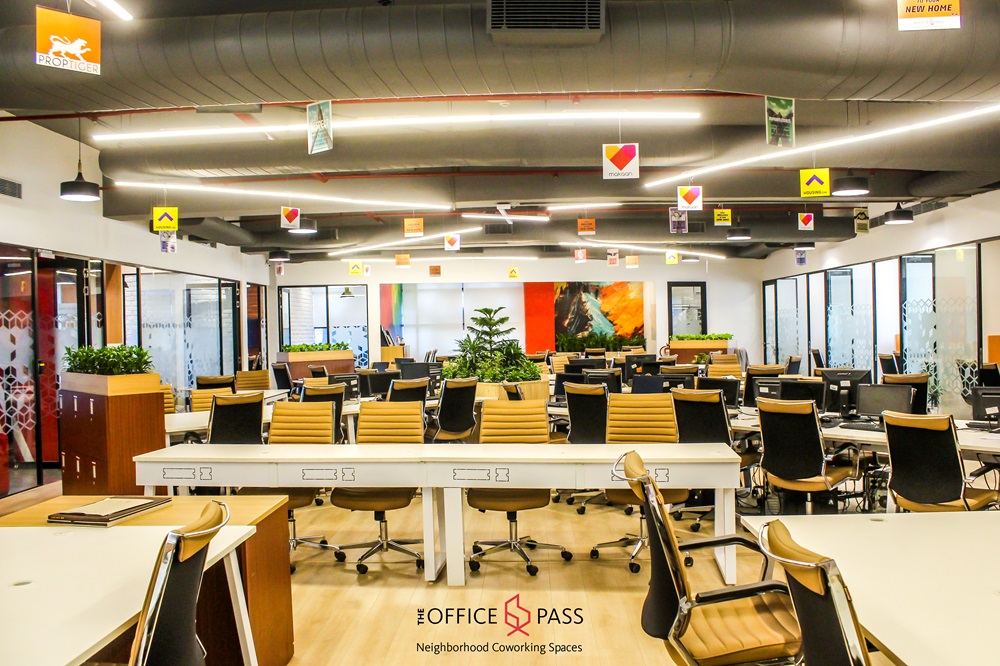
The Office Pass (TOP) offers coworking spaces in 3 prime centres of the Delhi/NCR region – Noida, Delhi, and Gurgaon. High-speed internet, well-equipped conference rooms, a warm work environment, and regular tea and coffee provisions are some of the top amenities offered at TOP offices. These spaces are perfect for startups, entrepreneurs and small firms. If you are looking for a coworking space in Delhi/NCR region, contact us at 08999 828282.
FREQUENTLY ASKED QUESTIONS (FAQS):
Question: How can coworking spaces be used for creative projects?
Answer:Â Coworking spaces greatly promote creativity. Members can get together, brainstorm ideas, and come up with innovative solutions to day-to-day business problems. There are additional facilities such as whiteboards, breakout areas for creative projects, design sprints, and ideas to help teams engage in innovative activities.
Question: Can I use a coworking space for temporary project teams from different companies?
Answer:Â Yes, it is possible to rent specific project rooms equipped with the required tools and amenities for specific project teams temporarily. This arrangement can be particularly helpful when engaging professionals from different companies for short-term projects.
Question: What are the unique uses of a co-working space beyond providing desks and chairs?
Answer:Â Co-working spaces are a complete work package. Other than providing the latest technological workstations to members, they also offer add-on facilities such as event spaces, phone booths, private meeting rooms, and relaxation spaces.
Question: Can I use a co-working space for recording podcasts or video content?
Answer:Â Yes, several co-working spaces are fitted with soundproof phone booths and conference rooms which can be ideally used for recording podcasts, video interviews, online courses, webinars, and the like.
Question: Are there opportunities for social interactions and community building in co-working spaces?
Answer:Â Absolutely! Co-working spaces promote networking and community building via amenities such as dining areas, lounges, and common spaces for members to get together and interact. Social events also help promote this idea, for example, themed parties, happy hours, and the like, which enable members to get to know each other better and form potential alliances and partnerships.
Question: Can I use a co-working space for professional development purposes?
Answer:Â Yes! Several co-working spaces offer skill-development sessions, workshops, etc., which help promote an environment of growth and learning.