

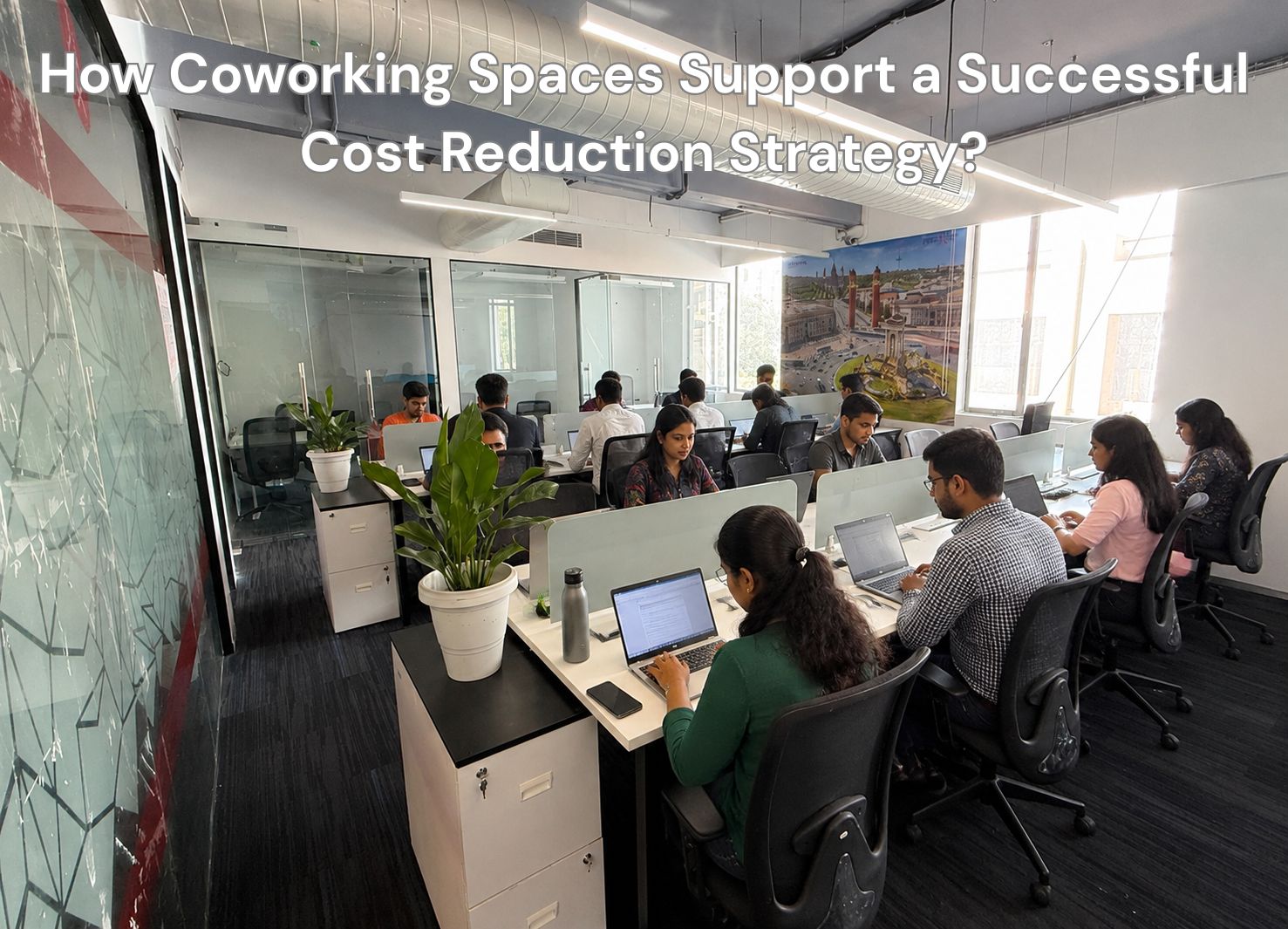
A well-planned cost reduction strategy doesn’t mean cutting corners — it means spending smarter. For startups, freelancers, and growing businesses across India, coworking spaces have become one of the most effective cost cutting strategies available today, replacing fixed overheads with flexible, pay-as-you-grow infrastructure.
Coworking spaces support cost reduction by converting large fixed expenses — rent, utilities, furniture, IT setup, maintenance, and staffing — into a single predictable membership fee. This shift alone can cut office-related overheads by 30–60%, while giving businesses access to premium infrastructure, prime locations, and scalable seating they couldn’t otherwise afford.
Why This Matters to Coworking Space Users?
If you’re already using or considering a coworking space, you’re likely trying to answer one of these questions:
- How much can I actually save by choosing coworking over a traditional office?
- What specific cost reduction methods does coworking enable?
- How do I use my coworking membership strategically, not just occupy a desk?
- Is coworking a genuine long-term cost control and cost reduction solution, or just a short-term fix?
This article answers all four — with practical, India-specific detail most coworking blogs skip.
💡 Are you looking for Coworking space in Gurgaon, Noida or Delhi?. We are just a call away.
Call now: 08999 828282
Top 5 Reasons Coworking Spaces Are Ideal for Cost Savings
- Coworking Eliminates the Biggest Fixed Cost: Real Estate
- Converting Fixed Costs into Variable Costs (The Core of Cost Control)
- Practical Cost Reduction Ideas Using Coworking Memberships
- Cost Reduction Techniques Specific to Indian Businesses
- Cost Control vs. Cost Reduction: What Coworking Actually Solves
1. Coworking Eliminates the Biggest Fixed Cost: Real Estate
Commercial real estate is typically the single largest fixed cost for any business. In cities like Bengaluru, Mumbai, Gurugram, and Pune, leasing a traditional office involves:
- Long lock-in periods (often 3–5 years)
- Security deposits of 6–12 months’ rent
- Interior fit-out costs (₹800–₹1,500 per sq. ft.)
- Ongoing maintenance, electricity, housekeeping, and security staff
A coworking membership replaces all of this with a monthly, per-seat fee — often 40–60% lower than the true total cost of an equivalent private office in the same location.
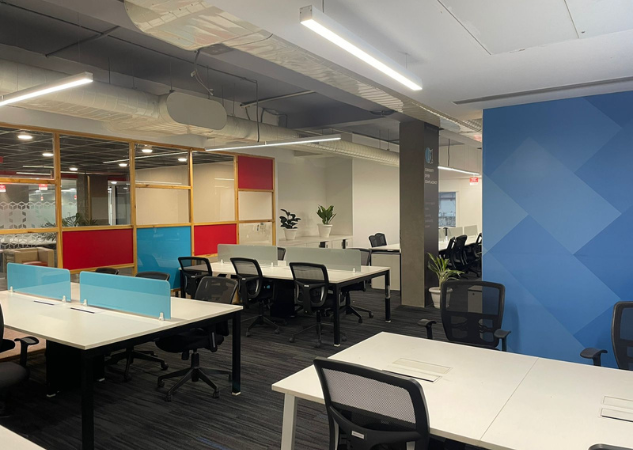
2. Converting Fixed Costs into Variable Costs (The Core of Cost Control)
This is the single most important cost reducing method coworking offers, and it’s the concept most competitor articles mention only in passing.
| Cost Type | Traditional Office | Coworking Space |
| Rent | Fixed, regardless of headcount | Scales with seats used |
| Furniture & Fit-out | One-time capital expense | Included in membership |
| Internet & IT infra | Owned and maintained in-house | Provided and managed |
| Utilities (power, AC, water) | Billed separately | Bundled into membership |
| Reception & housekeeping | Salaried staff | Included in service |
| Meeting rooms | Built and underused | Pay-per-use or credits |
By converting CapEx into OpEx, businesses gain the flexibility to scale seats up or down monthly — a direct application of variable-cost budgeting, which is a core principle in any serious cost reduction strategy.
3. Practical Cost Reduction Ideas Using Coworking Memberships
Beyond simply signing up, here are actionable cost cutting ideas coworking users often overlook:
- Right-size your seat count monthly. Don’t lock into a 20-seat plan for a 12-person team “just in case.” Most coworking operators allow monthly adjustments.
- Use hot desks for hybrid teams. If only 60% of your staff is in-office on any day, hot-desking (vs. dedicated desks) can cut seat costs by 20–30%.
- Leverage meeting room credits instead of booking external venues.
- Choose a hub-and-spoke model. Keep a small core office and use coworking spaces near client clusters or employee homes — reducing commute reimbursements and travel time.
- Negotiate multi-location plans. Many Indian coworking chains offer network-wide access at a lower blended rate than single-city dedicated plans.
- Avoid over-provisioning IT. Coworking spaces already provide enterprise-grade internet, servers, and security — skip duplicate in-house IT spend.
- Use community events for marketing. Many operators host free networking and demo-day events — a low-cost substitute for paid marketing venues.
Also Read: Why is Gurgaon (Gurugram) Called Millennium City of India?
4. Cost Reduction Techniques Specific to Indian Businesses
India’s coworking market (valued at over ₹40,000 crore and growing steadily) has matured enough to offer cost reduction techniques not available five years ago:
- GST input credit on coworking invoices — many operators issue GST-compliant invoices, allowing businesses to claim input tax credit, unlike some informal rental arrangements.
- No brokerage fees — traditional leasing in India often involves 1-month brokerage; coworking has none.
- Virtual office + coworking combo — businesses can register a prestigious business address for compliance purposes while operating remotely, reducing physical footprint costs entirely.
5. Cost Control vs. Cost Reduction: What Coworking Actually Solves
It’s worth distinguishing these two terms, since they’re often confused:
- Cost control is about staying within a planned budget (predictable monthly coworking fees make this easier to forecast).
- Cost reduction is about permanently lowering the cost base (coworking removes entire categories of fixed spend — deposits, fit-outs, maintenance staff).
A strong cost control and cost reduction approach uses coworking for both: predictable monthly billing for control, and structurally lower overhead for reduction.
Step-by-Step: Building a Coworking-Based Cost Reduction Plan
- Audit current office costs — rent, utilities, maintenance, IT, admin staff, insurance.
- Calculate true cost-per-employee in your existing setup.
- Compare against coworking per-seat pricing in your target city/locality.
- Model a hybrid or hub-and-spoke layout if full relocation isn’t feasible.
- Negotiate a flexible-term membership (monthly or quarterly, not multi-year).
- Review usage quarterly and adjust seat count based on actual attendance data.
- Reinvest savings into growth areas — hiring, product, or marketing.
Common Mistakes Coworking Users Make
- Over-committing to dedicated desks when hot desks would suffice.
- Ignoring meeting room credits and paying separately for external venues.
- Not asking for GST-compliant invoicing, losing input credit benefits.
- Choosing location based on prestige alone, ignoring team commute costs.
💡 Are you looking for Coworking space in Gurgaon, Noida or Delhi?. We are just a call away.
Call now: 08999 828282
Key Takeaways
- Coworking spaces convert fixed costs into variable, scalable expenses — the core mechanism behind effective cost reduction.
- Savings come from eliminated deposits, fit-outs, brokerage, and maintenance staff.
- Practical cost saving ideas for businesses include right-sizing seats, using meeting credits, and hub-and-spoke layouts.
- India-specific advantages include GST input credit, tier-2 city expansion, and virtual office combos.
- A disciplined office cost reduction plan pairs coworking flexibility with quarterly usage reviews for maximum savings.
Conclusion
Coworking spaces can play a key role in a successful cost reduction strategy by helping businesses replace high fixed overheads with flexible, scalable workspace solutions. From lower infrastructure and utility costs to reduced administrative expenses, shared offices support smarter spending without compromising productivity. For a professional and cost-efficient workspace solution, choose The Office Pass (TOP) Coworking Space. Contact TOP at +91-8999-828282 to find the right workspace for your business needs.
FREQUENTLY ASKED QUESTIONS (FAQS):
Question: Is coworking actually cheaper than a traditional office in India?
Answer: Yes, for most teams under 50 people. Coworking typically costs 30–50% less than a private office when factoring in deposits, fit-out, and maintenance, though very large, long-term teams may eventually find dedicated leased space more economical.
Question: What is the main cost reduction benefit of coworking?
Answer: Converting fixed real estate and infrastructure costs into a flexible, scalable monthly expense — the foundation of most effective cost reduction ideas for growing businesses.
Question: Can startups claim tax benefits on coworking expenses?
Answer: Yes. Coworking membership fees are treated as a business expense and are generally deductible, and GST-registered operators allow input tax credit claims.
Question: How do I choose the right coworking plan for cost savings?
Answer: Match your plan to actual daily attendance, not headcount — use hot desks for hybrid teams and dedicated desks only for consistently in-office staff.
Question: Does coworking help with long-term business cost reduction, or just short-term savings?
Answer: Both. Short-term, it removes upfront capital costs; long-term, it keeps overhead variable and scalable, avoiding the sunk costs of an owned or long-leased office.