
10 Best Government Schemes for Entrepreneurs in India 2024

6 Common Office Related Problems Faced by Entrepreneurs and How to Overcome

posted in: Entrepreneur | 0

Setting up an office boosts focus, collaboration, brand credibility, and attracts talent, clients, and potential investors.

Finding budget-friendly office space in India is tough. From location to lease terms, entrepreneurs face many challenges—but solutions exist for each.

6 common office-related problems faced by entrepreneurs and their solutions

  1. Choosing the Right Type of Office
  2. Finding the Right Location
  3. Assessing Rents and Costs
  4. Dealing with Lease Terms
  5. Furnishing and Maintaining the Office Space
  6. Choosing the Right Layout

1. Choosing the Right Type of Office

Finding the right type of office is more challenging than it appears. Not everyone can work from garages; not every business needs a dedicated and spacious private office either. When it comes to office space for entrepreneurs, there are no one-size-fits-all solutions – each company has its unique requirements, preferences, and limitations.

The key here is to choose an office that suits the size, maturity, and future plans of your company. While coworking office spaces are ideal for start-ups, evolving brands, and even large corporates with a distributed workforce, managed offices are a good choice for mature companies looking for a dedicated workspace that reflects their brand identity.

đź’ˇ Are you looking for Coworking space in Gurgaon, Noida or Delhi?. We are just a call away.
Call now: 08999 828282

2. Finding the Right Location

Identifying the right location is another challenge entrepreneurs face while hunting for an office. A centrally-located office with access to all parts of the city helps boost your business and brand visibility. However, commercial properties in prime localities are often exorbitantly priced, and hence unaffordable for entrepreneurs.

Shared offices are an ideal solution for entrepreneurs who want to set up their offices in a CBD or business park without breaking the bank. All reputed coworking operators have offices in prime business localities – you can choose a plan that best suits you. You can also opt for neighborhood coworking, where you can distribute your team over multiple locations.


The Office Pass South Delhi
 The Office Pass (TOP) Coworking Space in Delhi

3. Assessing Rents and Costs

Traditional office spaces come with hefty monthly rents and other costs – even established corporates spend up to 12% of their operational costs on real estate requirements, say surveys. For entrepreneurs running SMEs, it could go higher. In addition to monthly rents, you must also factor in security deposits, monthly maintenance charges, value-added services, utility bills, and the like.

Coworking serves as an excellent office space solution for entrepreneurs in this regard. Monthly rents and security deposits of coworking office spaces are lower than traditional offices, and there are no hidden charges either. According to studies, coworking helps business owners in major Indian cities can save up to 25% of their operational costs.

4. Dealing with Lease Terms

Entrepreneurs who are in the early stages of establishing their business don’t often have fixed requirements or plans – what they need is the flexibility to scale up or scale down. Choosing an office space for entrepreneurs with long-term leases and commitments can come in the way of flexibility.

Coworking is a great choice for entrepreneurs because of the flexibility it offers on all fronts. For starters, the lease term and notice period of shared offices are shorter than traditional offices. There is no lock-in period, which means you can exit the office or switch to other plans without hassles. Moreover, you can choose the number of desks as per your requirement and add or remove desks as you expand or downsize your team.

5. Furnishing and Maintaining the Office Space

Furnishing and maintenance are two common concerns of entrepreneurs looking for an office. You might get an unfurnished office at a lower rent, but you will end up spending a lot on furnishing the office. Likewise, maintaining the office can be a task that consumes your time, energy, and money.

Here again, coworking offices serve as the best type of office space for entrepreneurs. Shared offices are pre-furnished with ergonomic workstations, office accessories, office furniture, and all other amenities. All office-related maintenance activities are carried out by the service provider, so you can steer clear of such worries.

💡 SMBs looking for HR, Marketing, Technology and Funding solutions for their business.
Call Hello Jarvis  994 8000 800

6. Choosing the Right Layout

Choosing an office with the right design and layout can prove to be a challenge for entrepreneurs. To begin with, the workspace you choose must enhance the productivity and agility of your team. Ease of collaboration and networking is also a top priority, especially if you are a start-up or solopreneur.

Traditional offices with enclosed cubicles and partitions have had their day – now is the time of agile offices that combine common and private areas. The open floor design of a coworking space is ideal for entrepreneurs as it offers a dynamic, collaborative, and flexible work environment. At the same time, it comes with private nooks, quiet corners, meeting rooms, and other zones and areas – you can choose an area depending on the nature and intensity of your work.

Our Two Cents

Setting up an office might look like a challenge, but you can easily fix it with the right office space solution. For entrepreneurs who want a cost-effective office that offers the benefits of location, flexibility, agility, productivity, and ease of collaboration, there’s no better solution than a coworking office.

Want to know more about how shared offices can help ease your office woes? Contact The Office Pass (TOP) to book affordable coworking spaces in Gurgaon, Noida and South Delhi today at 8999 828282.

BOOK A COWORKING TOUR

The Office Pass opens its 9th office in Gurgaon near HUDA City Centre Metro Station

The Office Pass (TOP) opens its ninth office in Gurgaon near HUDA City Centre Metro Station

posted in: Coworking in Gurgaon | 0

New Delhi, 3rd Aug 2021: Notwithstanding the COVID 2nd wave & the slowdown in Commercial Real Estate, Neighbourhood Coworking operator, The Office Pass (TOP) further strengthened its roots in Gurgaon, India, by expanding its operations in the city. The company launched its ninth office at Unitech Cyber Park, Gurgaon, bridging the supply gap created by the rising demand for flexible neighbourhood workspaces from large and mid-size companies.

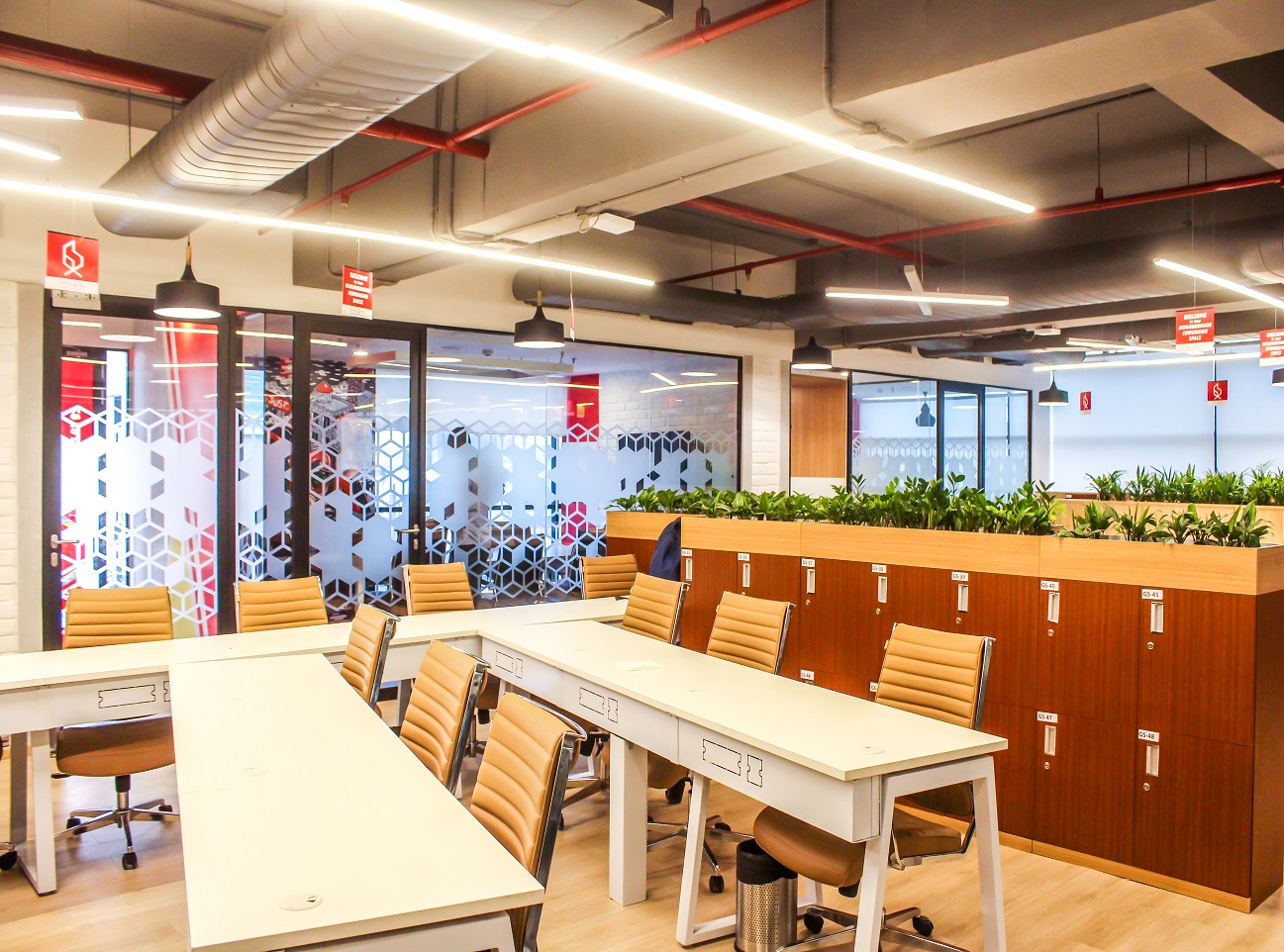
Situated near the HUDA City Centre metro station on the DMRC Yellow line, the office is easily accessible for people living anywhere in Gurgaon and Delhi. The new office boasts of a contemporary cutting-edge interior with a balance of warmth, minimalism and modern amenities. The office is divided into six blocks of approximately 60 desks each. Additionally, there are multiple meetings and conference rooms that can be booked without any additional charge.

“With this TOP becomes the only Neighbourhood coworking company to have seven running offices in Gurgaon. This is also in line with our vision of becoming the 7-11 equivalent of Coworking in India. Folks in Gurgaon can now reach the nearest TOP office within 10 min of wherever they are. We also have one office each in South Delhi and Noida.” said Aditya Verma, Founder& CEO of The Office Pass (TOP).

The Office Pass South Delhi
The Office Pass (TOP) Coworking Space in Delhi

The new workspace is ideal for support staff of financial services, insurance, and customer connect teams of corporates looking for flexible space. The new centre has been designed in compliance with the latest safety and hygiene standards to provide a healthy and secured workplace ecosystem.

Additionally, TOP plans to open their 10th Neighborhood Coworking Office in Gurgaon before September. The new office will be a 200-300 seater space either on the Golf Course Road or Sohna Road

In the near term, TOP plans to open 35 neighbourhood coworking spaces and 15 managed offices across Delhi-NCR, Mumbai and one more city to further strengthen its presence. These centres will cater to large corporates, SMEs as well as start-ups, continuing to nurture the spirit of innovation and enterprise across the nation.

“We reached operational breakeven last year and are on track to become profitable. Now that we know how to make money in this business, we would like to expand aggressively, keeping profitability at the centre stage of our growth.” said Nikhil Madan, Co-founder of The Office Pass (TOP).

The Office Pass (TOP) currently has 9 operational coworking centres. Neighbourhood Coworking is different from conventional Coworking as it caters to people living nearby. TOP offices are smaller in size (average 150-250 seats) but are spread across the city and near to both Commercial and Residential areas.

Given the resurgence in the number of Covid19 cases in the country, companies are relying more on work-from-home or work-near-home arrangements for their employees. This is fuelling the need for flexible offices. According to the JLL-FICCI report of 2019, the flex space market is expected to witness a growth of over 50 mn sq. ft. by 2023, with an average increase of around 15-20% per annum over the next three to four years.

BOOK A COWORKING TOUR

5 Reasons Why Employees prefer Coworking Offices Than Work From Home

Why Do Employees Favor Coworking Offices Rather Than Continuing to Work From Home

posted in: Coworking, Work From Home | 0

With fewer positive cases and decreasing mortality rates, the second wave of COVID-19 is slowly receding in India. Though state governments have started easing lockdown restrictions, many businesses are letting their employees work from home in view of their safety and an impending third wave.

However, despite the benefits offered by the work-from-home (WFH) model, not everyone is enthusiastic about it. Many employees favor working from coworking spaces, neighborhood offices, and other flexible work arrangements rather than continuing to #WorkFromHome.

Wondering why? Let’s examine the top 5 reasons why shared offices are a preferred choice of employees for working post-COVID second wave.

5 reasons why shared offices are a preferred choice of employees for working post COVID second wave

  1. Employees Crave More In-Person Time with Their Teams
  2. Employees Need Professional Networks More Than Ever
  3. Digital Exhaustion is Taking Over WFH Teams
  4. Long-Term WFH is Affecting the Mental Health of Employees
  5. Working from Home is Not a Productive Experience for Everyone

1. Employees Crave More In-Person Time with Their Teams

Microsoft released the India-specific findings of its annual Work Trend Index in June 2021, and it reveals an interesting paradox. While 74% of employees in India want flexible and remote working options, 73% of them are looking for more in-person interactions with their teams.

It makes one thing clear – a work arrangement that combines remote working and face-to-face interactions is the way to go. Coworking serves as the best solution for companies looking for sustainable back to office plans after the second wave. Working from shared offices gives employees the flexibility of remote working while they also get to spend quality time with their teams.

2. Employees Need Professional Networks More Than Ever

Networking is integral to the productivity and career growth of employees. It is not just about meeting people over coffee or lunch – professional networking also helps build social connections, facilitates knowledge sharing, and stimulates ideas, all of which lead to innovation. In a business ecosystem wrecked by the pandemic, we need networking and innovation more than ever.

5 reasons why shared offices are a preferred choice of employees for working post COVID second wave

One of the main work from home disadvantages is that people don’t get opportunities to network with their contemporaries. As the second wave of COVID-19 is settling down, more and more employees are favoring coworking as it enables networking and collaboration within the business community.

3. Digital Exhaustion is Taking Over WFH Teams

When COVID-19 first hit the world and disrupted business activities, companies turned to digital solutions as a means to communicate and collaborate with their WFH teams. More than a year and a half into the pandemic, surveys show that digital exhaustion has started hitting employees working from home.

While there is no denying that digital technologies are the best way to collaborate during the pandemic, having a workplace other than home helps your workforce deal with digital exhaustion. By working from coworking spaces, teams can reduce the number of online meetings, long video calls, and other forms of digital overload to a considerable extent.

4. Long-Term WFH is Affecting the Mental Health of Employees

Mental health is another reason why employees choose shared offices as their preferred mode of working post covid 2nd wave. Even the first wave of the pandemic has seriously affected the mental wellbeing of WFH teams due to isolation, stress, and burnout, say surveys. The second wave has only amplified these impacts.

One of the best ways to combat such work from home disadvantages is to have a remote workplace where employees feel supported. By working from community-inspired and collaborative workplaces like coworking offices, professionals and entrepreneurs can escape isolation and get the support they need to tide over the challenging times.

5. Working from Home is Not a Productive Experience for Everyone

Despite its merits, the WFH model widens certain social inequalities. Working from home might be a productive experience for a person living in a 2000 sq ft villa with a fully-furnished home office. However, it is not so for someone living in a small apartment without a designated work area or ergonomic furniture. Likewise, studies have found that women working from home are often pressed down with domestic chores.

Since the transition to WFH happened fast during the first wave, many employees didn’t have a choice but to turn their bedrooms and kitchens into offices. However, with the second wave settling down, they are looking for productive, professional, and well-equipped workspaces, such as coworking offices, rather than continuing to work from make-shift home offices.

Final Thoughts

With isolation, distractions, digital exhaustion, lack of in-person interactions, and dwindling networking opportunities, long-term WFH has started taking a toll on employees. Given that remote working is the future of many companies, employees need a flexible, well-equipped, supportive, and productive work environment. Working from shared offices is a far more sustainable solution than working from home in this regard.

So, what are your #BackToOffice plans after the second wave? If you are looking for fully-equipped shared offices in Gurgaon, Noida, and South Delhi, contact The Office Pass (TOP) right away.

BOOK A COWORKING TOUR

Corporate Offices vs Coworking Offices vs Working from Home - Which is better?

Corporate Offices, Coworking Offices or Working from Home – Which Is the Best Solution for Corporates?

posted in: Coworking | 0

There was a time MNCs and large corporates conducted business solely from centrally located “corporate offices”. Well, not anymore! As remote working is becoming a norm, many organizations have started expanding their corporate real estate portfolio.

Today, businesses around the globe have switched to working from home (WFH) due to the ongoing pandemic. Corporates are also turning to Coworking in an attempt to enhance flexibility, create a distributed and hybrid workforce and to save cost. The question is which works best for corporates – corporate offices, WFH, or Coworking offices?

Let’s find out by analyzing five key factors central to today’s corporate ecosystem – flexibility, agility, productivity, safety, and community.

5 Key factors of Today’s Corporate Ecosystem

  1. Flexibility
  2. Agility
  3. Productivity
  4. Safety and Wellbeing
  5. Community

1. Flexibility

It’s no secret that corporate employees always preferred flexibility, and the pandemic has made it their top priority. According to the 2020 EY Work Reimagined Survey, 90% of respondents want flexibility in when and where they work.

As traditional corporate offices are location-dependent and have fixed timings, they don’t score high on flexibility. Corporate teams that work from home, on the other hand, enjoy location independence but rarely get flexible work hours. Even worse, they end up working longer hours since the line between professional and personal life is often blurred while working from home.

Coworking space offers both flexible work hours and location independence. By choosing neighborhood Coworking, corporate employees get the flexibility to work from a location nearest to their residence. Flexi passes, hot desking, and pay-per-use packages make it possible for Coworking members to work on flexible schedules.

2. Agility

The concept of agile workplaces is gaining traction among MNCs and corporates. In an agile office space, employees are not permanently assigned to desks. Instead, they move around freely and switch between desks, private nooks, meeting rooms, lounges, common workstations, etc., based on the type and intensity of the work.

A traditional corporate office doesn’t offer much agility to those who work in it. Teams are often assigned dedicated cabins and desks, and the freedom to utilize diverse zones and areas within the office is limited. People working from home also don’t have the agility for activity-based working.

One of the main benefits of Coworking spaces is agility. Designed like an open office, a shared office comprises regular workstations, private corners, quiet zones, common work areas, outdoor seating zones, meeting rooms, and more. Corporates working from a Coworking space can make the most of the agility it offers to enhance employee experience.

Corporate Offices, Coworking Offices or Working From Home

3. Productivity

Employee productivity is another key consideration in the current corporate ecosystem. Large corporates across the world are investing money and time to increase the productivity of their workforce.

Working remotely from locations other than corporate offices and traditional setups boosts productivity, say reports. That said, remote employees who work from home face productivity problems due to distractions, insufficient amenities, absence of a productive work environment, digital overload, and other factors.

Shared offices serve as a great remote work option for companies looking to enhance employee productivity. According to the JLL survey on the Future of Global Office Demands, Coworking has the highest impact on productivity. What’s more, it allows corporates to continue working remotely and enjoy state-of-the-art facilities at the same time.

4. Safety and Wellbeing

Employee safety has always been a top priority of large corporates. One of the reasons companies switched from corporate offices to working from home during the pandemic was to ensure the safety and security of employees.

Working from home, without any doubt, is the safest work arrangement. However, long-term WFH does more harm than good – the digital fatigue and social isolation while working from home impact the emotional and mental health of employees. When employee wellbeing is considered, WFH might not be an ideal work agreement for corporates.

Here again, Coworking is proving to be a better choice for corporates. Neighborhood offices make it possible for employees to walk to work, which is safer than commuting to the corporate office. Shared offices also promote the emotional and mental wellbeing of employees by surrounding them with a dynamic and supportive business community.

5. Community

In the current corporate ecosystem hit by the pandemic, nothing is more important than community – it is through strategic collaborations that businesses recover and revive themselves. Workplaces that foster collaboration and communities are essential for corporates to create a sense of belonging among the workforce.

The work from home model makes little room for in-person interactions and consequently, it damages professional networks. Corporate offices are better than WFH in fostering internal and cross-functional collaboration within the organization, but connecting with the larger business community remains a challenge.

Collaboration and community are at the heart of Coworking, and that’s why businesses are eager to return to Coworking spaces rather than continuing with WFH. By choosing to work out of a shared office, corporates can ensure both internal and external collaboration.

Final Thoughts

In a business world moving towards hybrid work models, corporate offices, WFH, and shared offices all have their roles to play. That said, Coworking has a more revolutionizing effect on corporates as it provides them with the most viable alternate workplace that is flexible, productive, agile, and above all, collaborative.

BOOK A COWORKING TOUR